
Herbs & formulations
Ashwagandha Benefits: What Ayurveda and Research Say About Stress, Sleep & Strength
India's most famous adaptogen is everywhere — gummies, powders, drops. Here is what ashwagandha can (and can't) do, in plain language.
By the PureHeal Ayurveda editorial team
In this article
- What is ashwagandha?
- Ashwagandha in Ayurveda
- What does research say? The honest summary
- Potential benefits explained
- How to take ashwagandha
- Side effects and who should avoid ashwagandha
- Ashwagandha vs other calming herbs
- How to choose a good ashwagandha product
- Lifestyle comes first
- Frequently asked questions
Few herbs have travelled from the Indian kitchen cupboard to global wellness shelves as fast as ashwagandha. Once a bitter powder your nani mixed into warm milk, it now shows up in gummies, capsules, coffee blends and drops. With so much marketing around it, it is worth stepping back and asking: what are the real ashwagandha benefits, and what is just hype?
What is ashwagandha?
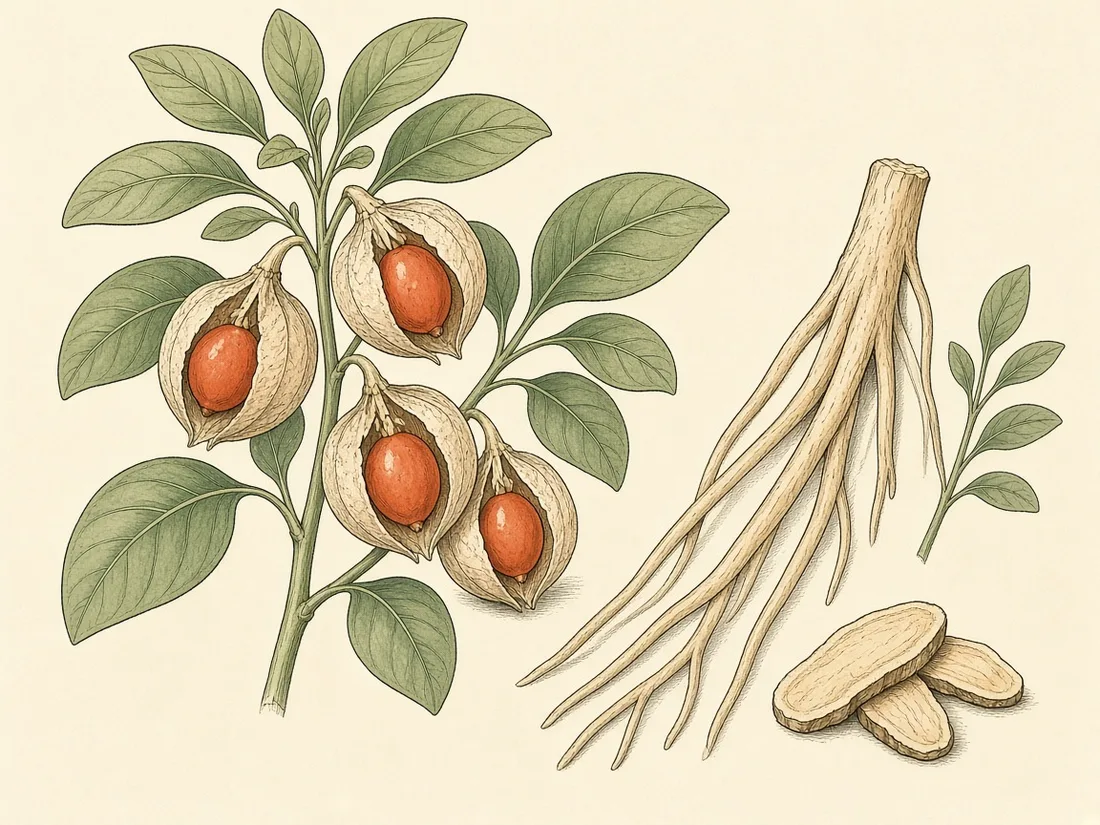
Ashwagandha (Withania somnifera), also called Indian ginseng or asgandh, is a small evergreen shrub that grows in drier parts of India, the Middle East and Africa. The root is the part most used in Ayurveda. Its Sanskrit name is often explained as "smell of a horse" — a reference both to the root's earthy smell and to the traditional belief that it gives the strength of a horse.
According to the US National Center for Complementary and Integrative Health (NCCIH), ashwagandha contains bioactive compounds called withanolides, which have been associated with anti-inflammatory and antioxidant effects in laboratory research.
Ashwagandha in Ayurveda
In classical Ayurveda, ashwagandha is described as a rasayana (rejuvenative), balya (strength-promoting) and vajikarana (supporting vitality) herb. It is traditionally considered warming and grounding, and is used to pacify Vata and Kapha. Traditional preparations include:
- Ashwagandha churna (powder), often taken with warm milk or ghee
- Ashwagandharishta, a fermented liquid preparation
- Ashwagandha ghrita (medicated ghee)
- Combination formulas with herbs like shatavari, brahmi or gokshura
Ayurvedic doctors choose the form, dose and combination based on the person's constitution (prakriti), digestion and health condition — which is why "one size fits all" advice online can be misleading.
What does research say? The honest summary
Many studies have been done on ashwagandha, but the NCCIH points out that many are small and use different preparations, which makes firm conclusions hard. Here is where things stand:
| Claimed benefit | Strength of evidence |
|---|---|
| Stress | Some preparations may help — a 2024 meta-analysis of 9 trials found lower perceived stress scores (Arumugam et al.) |
| Sleep | Some preparations may help, per NCCIH; a 2024 meta-analysis saw improvements in some sleep measures (Fatima et al.) |
| Anxiety | Evidence unclear; results are promising but inconsistent |
| Male fertility and testosterone | Limited evidence from 2–4 month studies (NCCIH) |
| Athletic performance, memory, diabetes, menopause | Not enough evidence to say (NCCIH) |
| COVID-19 or "immunity" claims | Not enough high-quality evidence (NCCIH) |
In short: stress and sleep are where the research looks most promising. Claims beyond that are, at best, not yet proven.
Potential benefits explained
1. Support during stressful periods
Ashwagandha is often called an adaptogen — a herb believed to help the body cope with stress. In trials, adults under stress who took ashwagandha extracts reported lower stress scores than those on placebo, and some trials measured lower cortisol. For modern lifestyles — long work hours, exams, caring for family — this is the benefit most people look for.
2. Better sleep quality
The plant's botanical name, somnifera, literally means "sleep-inducing". Some research supports a modest benefit for falling asleep and sleep quality. It works best alongside good sleep habits — see our Ayurvedic tips for better sleep.
3. Strength, stamina and vitality
As a balya and rasayana herb, ashwagandha has been used for centuries to support strength, recovery after illness and general vitality — especially for older adults and people with Vata-type weakness. Modern evidence for athletic performance is still limited.
How to take ashwagandha
There is no single correct dose — it depends on the form and the person. Some general, sensible guidance:
- Forms: powder (churna) with warm milk, standardised capsules or tablets, or liquid extracts/drops. Liquid extracts are convenient and easy to measure; PureHeal's Ashwagandha Extract Drops are one such option.
- Timing: many people prefer evening or bedtime because of its calming nature; some take it after breakfast. Taking it with food can reduce stomach upset.
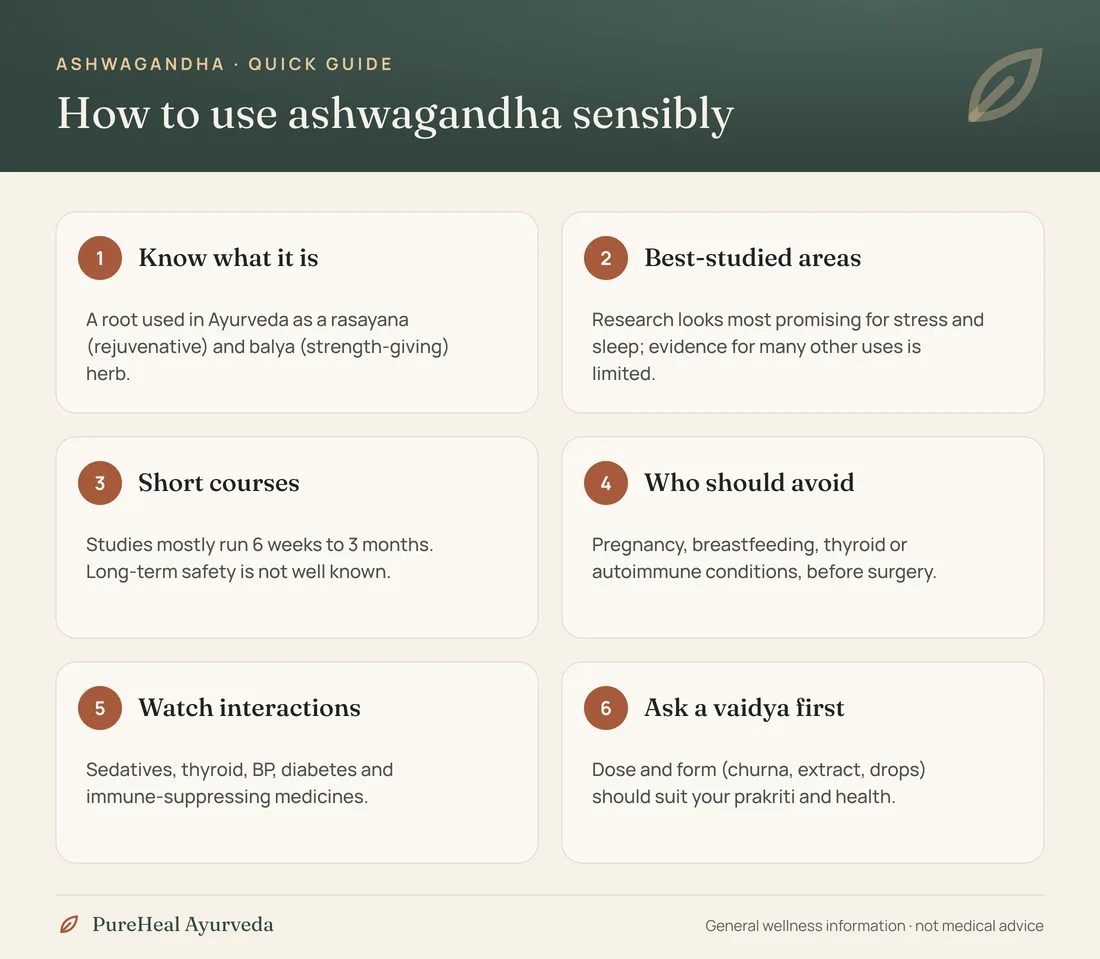
- Duration: most studies lasted 6 weeks to 3 months. NCCIH notes ashwagandha may be safe in the short term (up to 3 months), but long-term safety isn't well studied. Take breaks and review with your doctor.
- Follow the label, and don't combine several ashwagandha products at once.
Side effects and who should avoid ashwagandha
Ashwagandha is natural, but natural doesn't mean right for everyone. According to the NCCIH:
- Possible side effects include drowsiness, stomach upset, diarrhoea and vomiting.
- Rarely, cases of liver injury have been linked to ashwagandha supplements. Stop and see a doctor if you notice yellowing of eyes or skin, dark urine, unusual tiredness or abdominal pain.
- Avoid during pregnancy and breastfeeding.
- Not recommended for people with thyroid disorders or autoimmune conditions, or before surgery.
- It may interact with medicines for diabetes, blood pressure, thyroid, seizures, sedatives and immunosuppressants.
- People with hormone-sensitive prostate cancer should avoid it.
If any of these apply to you, please speak to your doctor before using ashwagandha in any form.
Ashwagandha vs other calming herbs
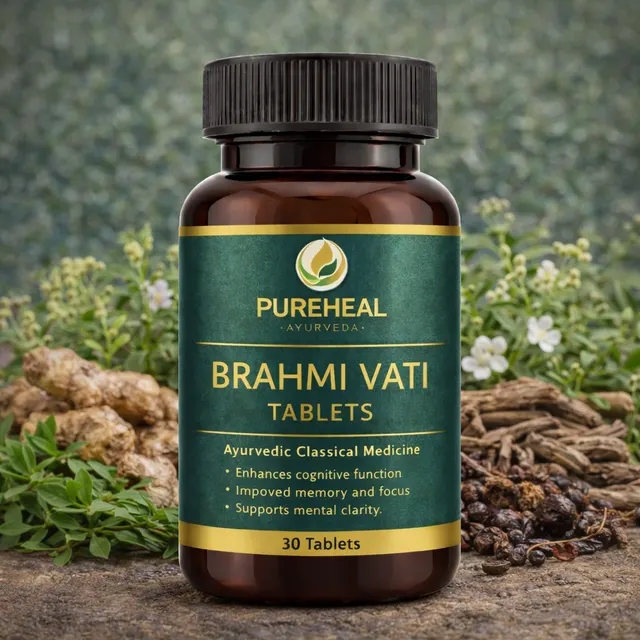
Ashwagandha is often compared with Brahmi (Bacopa), another classical medhya herb. Broadly, ashwagandha is used as a grounding, strengthening herb for stress and fatigue, while Brahmi is traditionally used more for mental clarity, focus and memory. Ayurvedic doctors sometimes combine them. Read more in our Brahmi benefits guide. For sleep specifically, formulations like PureHeal's Nidra Ease Drops combine several traditional calming herbs.
How to choose a good ashwagandha product
With so many brands on the market, a few checks help:
- Root vs leaf: classical Ayurveda uses the root. Check whether a product uses root, leaf or a mix.
- Clear labelling: the label should state the herb's botanical name (Withania somnifera), the amount per dose and the extract type.
- Licensed manufacturer: in India, Ayurvedic products should carry an AYUSH manufacturing licence number.
- No exaggerated claims: be wary of products promising to "cure" anxiety, thyroid problems or infertility.
- One at a time: many multivitamins and "stress" blends already contain ashwagandha, so check labels to avoid doubling up.
Lifestyle comes first
No herb can out-work a lifestyle of 5-hour nights, skipped meals and constant screen time. Ashwagandha works best as a support to regular sleep, nourishing food, daily movement, time outdoors and genuine rest.
Frequently asked questions
What are the main benefits of ashwagandha?
Research is most promising for stress and sleep: some ashwagandha preparations may reduce perceived stress and improve sleep quality. Ayurveda also uses it traditionally for strength and vitality. Evidence for many other claims is limited.
How long does ashwagandha take to work?
Most clinical studies looked at effects after about 6 to 8 weeks of daily use, and up to 3 months. Some people notice calmer sleep sooner, but results vary.
Can women take ashwagandha?
Many women use ashwagandha for stress and sleep. However, it should be avoided during pregnancy and breastfeeding, and by anyone with thyroid or autoimmune conditions. Consult a doctor first.
Is ashwagandha safe to take daily?
It may be safe for most healthy adults in the short term (up to about 3 months). Long-term safety isn't well established, rare liver problems have been reported, and it can interact with several medicines — so check with a qualified doctor before daily use.
Sources
- NCCIH (US National Institutes of Health) — Ashwagandha: Usefulness and Safety
- Arumugam V et al. (2024). Effects of Ashwagandha on stress and anxiety: a systematic review and meta-analysis. Explore (NY).
- Fatima K et al. (2024). Safety and efficacy of Withania somnifera for anxiety and insomnia. Hum Psychopharmacol.
- NCCIH — Ayurvedic Medicine: In Depth



Keep reading
Related articles

Sleep & stress
Can't Sleep? 10 Ayurvedic Tips for Better Sleep, Naturally
Late-night scrolling, racing thoughts, 3 am wake-ups — Ayurveda calls it a Vata problem. Here is a calm, practical routine to help you sleep better.

Sleep & stress
Brahmi Benefits for Memory, Focus and Exam Stress: A Practical Guide
Board exams, deadlines, brain fog — Brahmi is Ayurveda's classic herb for the mind. Here is what it can do, what research shows and how to use it…

Seasonal wellness
How to Boost Immunity in Winter the Ayurvedic Way: 10 Daily Habits
Winter is the season Ayurveda calls the time of strength. Here is how to use it well — with food, routine, movement and a few trusted kitchen herbs.