
Sleep & stress
Can't Sleep? 10 Ayurvedic Tips for Better Sleep, Naturally
Late-night scrolling, racing thoughts, 3 am wake-ups — Ayurveda calls it a Vata problem. Here is a calm, practical routine to help you sleep better.
By the PureHeal Ayurveda editorial team

In this article
- 1. Keep the same sleep and wake time
- 2. Eat a light, early dinner
- 3. Switch off screens an hour before bed
- 4. Padabhyanga — the 5-minute foot massage
- 5. Warm milk with a pinch of spice
- 6. Calm the breath
- 7. Make your bedroom sleep-friendly
- 8. Get morning sunlight and daytime movement
- 9. Write it down before bed
- 10. Herbs that Ayurveda uses for sleep — with guidance
- When sleeplessness needs a doctor
- Frequently asked questions
You are tired all day, but the moment your head hits the pillow, your mind switches on — tomorrow's meeting, an unanswered WhatsApp, a reel you half-watched. Or you fall asleep fine but wake at 3 am and stare at the ceiling. If this sounds familiar, you are far from alone.
In Ayurveda, nidra (sleep) is one of the three pillars of health (trayopastambha), along with food (ahara) and a balanced lifestyle (brahmacharya). Poor sleep is usually linked to an excess of Vata — the mobile, light, airy quality that makes the mind restless — sometimes with Pitta (heat, intensity) for people who wake up in the early hours with a busy mind. The Ayurvedic approach is to bring the body back into rhythm and to calm, ground and warm the system in the evening.
Below are ten practical tips. Most of them overlap with what sleep scientists call sleep hygiene, which the NHS recommends as the first step for insomnia.
1. Keep the same sleep and wake time
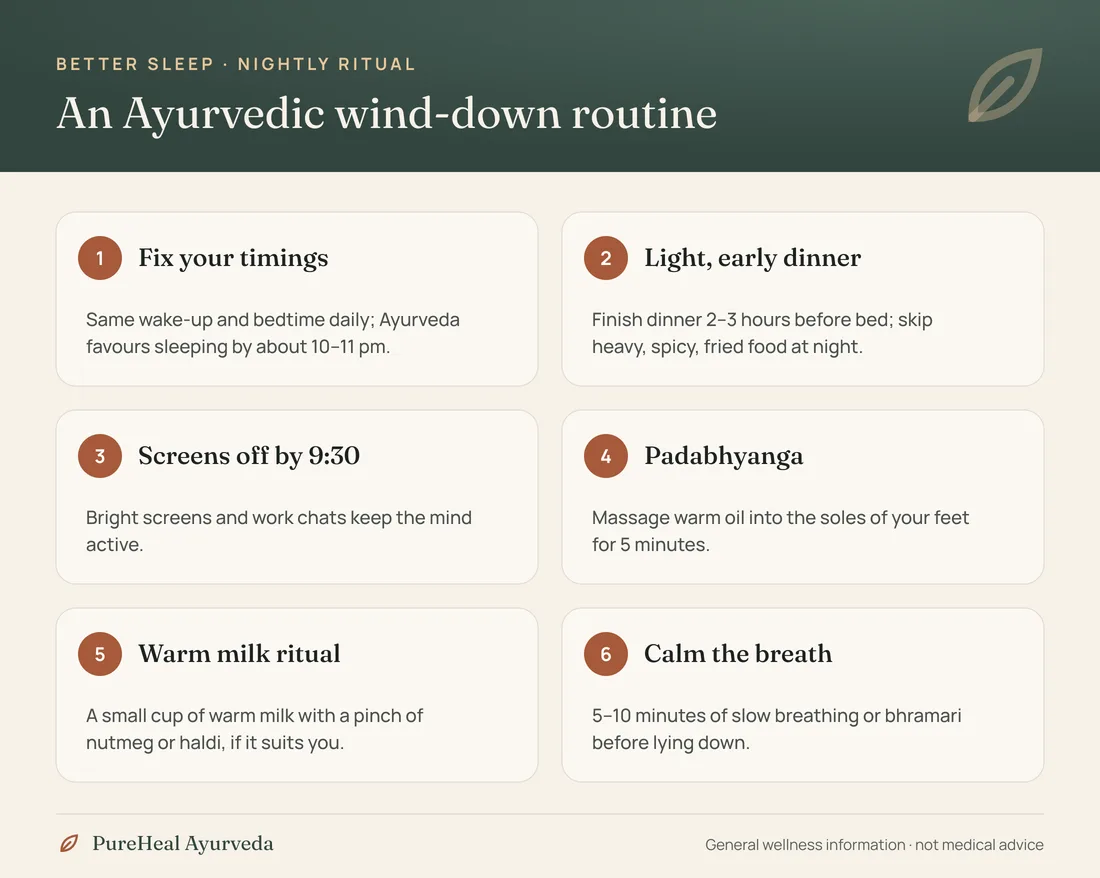
Ayurveda places great importance on dinacharya, a regular daily rhythm. Waking up and going to bed at roughly the same time every day — weekends included — trains your body clock. Traditional texts favour sleeping by around 10–11 pm and waking early, around sunrise. If that feels impossible right now, shift your bedtime by 15 minutes every few days.
2. Eat a light, early dinner
A heavy, late, spicy or fried dinner keeps digestion busy when the body wants to rest. Aim to finish dinner 2–3 hours before bed. Khichdi, dal-rice, soups, cooked vegetables and rotis are easy evening foods. Avoid large amounts of tea, coffee and colas after mid-afternoon, since caffeine can stay in your system for hours.
3. Switch off screens an hour before bed
Bright screens, work emails and endless short videos keep the mind alert — very much an "agitated Vata" state. Try a digital sunset: phone on silent and out of reach (not under your pillow) about an hour before sleep. Read a paper book, listen to soft music or talk with family instead.

4. Padabhyanga — the 5-minute foot massage
Padabhyanga, massaging warm oil into the soles of the feet, is a classical Ayurvedic bedtime practice described as calming and grounding. It is easy:
- Warm a teaspoon of sesame, coconut or ghee slightly.
- Massage each sole for 2–3 minutes, including the toes and heels.
- Wear cotton socks to bed so the oil doesn't stain the sheets.
There is limited research on padabhyanga itself, but many people simply find it relaxing — and in winter, it also helps cracked heels.
5. Warm milk with a pinch of spice
A small cup of warm milk at bedtime is one of the most traditional Indian sleep habits. Ayurveda describes milk as nourishing and calming. Add a pinch of nutmeg (jaiphal), cardamom or turmeric if you like. Keep it small, avoid it if you are lactose intolerant, and don't drink it right after a heavy dinner.
6. Calm the breath
Slow breathing activates the body's relaxation response. Before lying down, try 5–10 minutes of:
- Anulom-vilom (alternate nostril breathing), slowly and without strain, or
- Bhramari (humming bee breath): inhale through the nose, then exhale with a soft humming sound.
The US NCCIH notes that relaxation techniques and mind-body practices such as yoga may help with sleep for some people.
7. Make your bedroom sleep-friendly
- Keep the room dark, quiet and slightly cool, with a warm blanket in winter.
- Use the bed for sleep only — not for work calls or office laptops.
- If you can't sleep after about 20 minutes, get up, sit in dim light and do something calm until you feel sleepy.
8. Get morning sunlight and daytime movement
Sleep at night starts in the morning. Natural light soon after waking helps set your body clock, and regular exercise improves sleep quality. Avoid intense workouts late at night. Ayurveda also advises against long daytime naps for most adults (except in hot summers or when unwell), as they can disturb night sleep.
9. Write it down before bed
Racing thoughts are a big reason people lie awake. Spend five minutes writing tomorrow's to-do list or whatever is on your mind. It is a simple way to "close the tabs" in your head.
10. Herbs that Ayurveda uses for sleep — with guidance
Ayurveda has a long tradition of calming herbs, called medhya (mind-supporting) or nidrajanana (sleep-promoting). Commonly used ones include:
- Ashwagandha — research suggests some ashwagandha preparations may help with stress and sleep. According to the NCCIH, it may be safe short term (up to 3 months), but it is not for pregnancy, breastfeeding, thyroid or autoimmune conditions, and may interact with sedatives and other medicines. A 2024 meta-analysis of small trials found improvements in some sleep measures but called for larger studies (Fatima et al., 2024). Read our full ashwagandha guide.
- Brahmi — traditionally used to calm the mind and support memory; see our Brahmi guide.
- Jatamansi, tagara and shankhpushpi — classical calming herbs often used in combination formulas.
PureHeal's Nidra Ease Drops are a herbal liquid formulation designed to support relaxation and restful sleep, and Brahmi Vati is a classical tablet traditionally used for mental calm. If you'd like to try a herbal product, start with one, follow the label, and talk to a qualified Ayurvedic doctor first — especially if you take sleeping pills, anti-anxiety or antidepressant medicines, thyroid medicine, or are pregnant.
When sleeplessness needs a doctor
Please see a doctor if:
- Poor sleep has lasted more than a few weeks and affects your daytime life
- You snore loudly, gasp or stop breathing during sleep (possible sleep apnoea)
- Sleeplessness comes with low mood, anxiety or thoughts of self-harm
- You feel restless, uncomfortable sensations in your legs at night
Insomnia is treatable. Cognitive behavioural therapy for insomnia (CBT-I) is a well-established first-line treatment that a doctor can guide you to.
Frequently asked questions
What is the best time to sleep according to Ayurveda?
Ayurvedic texts favour going to bed by around 10–11 pm and waking near sunrise. The most important thing is a regular rhythm — sleeping and waking at the same time daily.
Does warm milk at night really help sleep?
Warm milk is a traditional calming ritual and many people find it relaxing. Scientific evidence is limited, but as a small, comforting part of a bedtime routine it is harmless for most people who tolerate dairy.
Can I take ashwagandha for sleep every night?
Some studies suggest ashwagandha may help sleep, but research mainly covers short-term use. It isn't suitable during pregnancy, breastfeeding, or with thyroid or autoimmune conditions, and may interact with sedatives. Ask a qualified doctor before using it regularly.
Are herbal sleep drops habit-forming?
Herbal formulations are generally not considered habit-forming in the way some sleeping pills can be, but individual products differ. Use them as advised, alongside good sleep habits, and consult a doctor if sleep problems persist.
Sources
- NHS — Insomnia
- NCCIH — Sleep Disorders and Complementary Health Approaches
- NCCIH — Ashwagandha
- Fatima K et al. (2024). Safety and efficacy of Withania somnifera for anxiety and insomnia: systematic review and meta-analysis. Hum Psychopharmacol.




Keep reading
Related articles

Herbs & formulations
Ashwagandha Benefits: What Ayurveda and Research Say About Stress, Sleep & Strength
India's most famous adaptogen is everywhere — gummies, powders, drops. Here is what ashwagandha can (and can't) do, in plain language.

Sleep & stress
Brahmi Benefits for Memory, Focus and Exam Stress: A Practical Guide
Board exams, deadlines, brain fog — Brahmi is Ayurveda's classic herb for the mind. Here is what it can do, what research shows and how to use it…

Skin care
Winter Skin Care Tips for Dry Skin: An Ayurvedic Routine That Works
Tight, flaky, itchy skin is classic winter Vata. Here is a gentle routine — oil, bath, soap, moisturiser, food — that keeps skin soft all season.