
Seasonal wellness
How to Boost Immunity in Winter the Ayurvedic Way: 10 Daily Habits
Winter is the season Ayurveda calls the time of strength. Here is how to use it well — with food, routine, movement and a few trusted kitchen herbs.
By the PureHeal Ayurveda editorial team
In this article
- 1. Eat warm, freshly cooked, nourishing food
- 2. Sip warm water, not chilled drinks
- 3. Use your masala dabba wisely
- 4. A simple homemade kadha (in moderation)
- 5. Oil massage (abhyanga) before bath
- 6. Move your body every day
- 7. Protect your sleep
- 8. Keep digestion regular
- 9. Dress for the season — and keep your head and feet warm
- 10. Herbs and extracts — use with guidance
- When a cold is more than a cold
- Frequently asked questions
As soon as the mornings turn foggy, the questions start in every Indian home: "Kadha bana du?", "Chyawanprash shuru karein?", "Bachchon ko baar-baar sardi kyun ho rahi hai?" Winter brings colds, coughs and seasonal infections — and, in North India, smog on top of it.
Interestingly, classical Ayurveda sees early winter as a season of strength. In the texts, the body's natural strength (bala) and digestive fire (agni) are said to be at their best in Hemant ritu (roughly mid-November to mid-January) and Shishir ritu (mid-January to mid-March). The idea of seasonal routine, called ritucharya, is to use this strength well — eating nourishing food, staying active and protecting yourself from cold and dryness. A review in the journal Ayu describes ritucharya as a practical lifestyle tool for preventing season-related imbalance (Thakkar et al., 2011).
One honest note before we begin: "boosting immunity" is a popular phrase, but no single food or herb switches your immune system to "high". What research consistently supports is the boring, powerful stuff — good sleep, balanced nutrition, regular exercise, vaccinations as advised by your doctor, hygiene and managing stress. Ayurveda's winter routine fits neatly around these.
1. Eat warm, freshly cooked, nourishing food
Because agni is said to be strong in winter, Ayurveda recommends more nourishing food than in summer — not less. Skipping meals or living on salads and cold drinks is considered a mistake in this season.
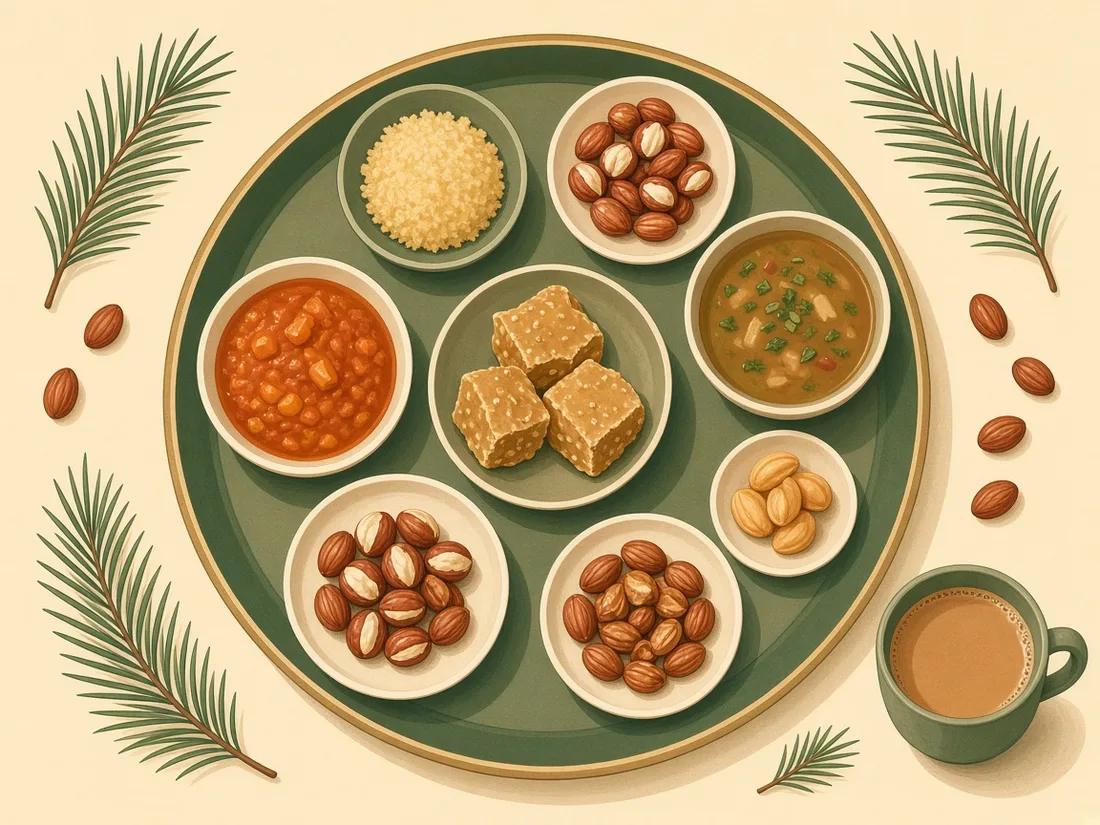
- Choose warm, cooked meals: dal, khichdi, vegetable soups, sabzi with seasonal greens like sarson, methi, palak and bathua.
- Use winter grains such as bajra, makka and jowar alongside wheat and rice.
- A little ghee with meals and til (sesame) and gur (jaggery) in moderation are traditional winter foods.
- Add seasonal fruits: amla, oranges, guavas and pomegranates are excellent vitamin-C sources.
2. Sip warm water, not chilled drinks
Winter thirst is low, so many of us drink far too little. Keep a flask of warm water nearby and sip through the day. Ayurveda considers warm water easier on digestion and comforting for the throat during cold weather. Herbal teas with ginger or tulsi count too.
3. Use your masala dabba wisely
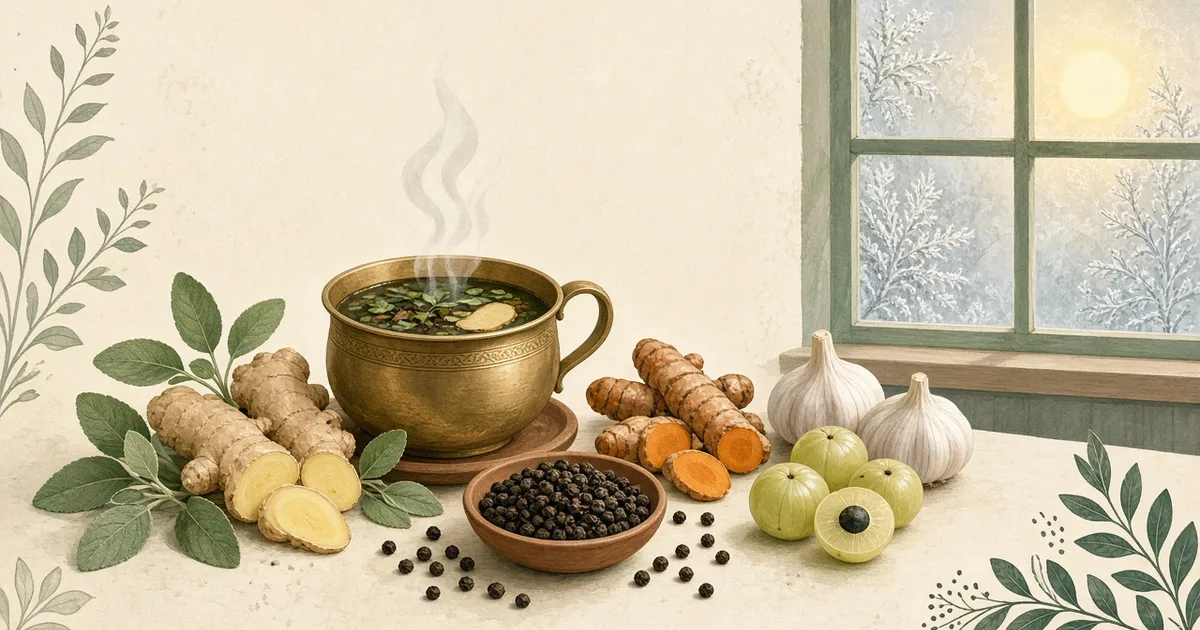
The spices in an Indian kitchen are Ayurveda's first line of everyday self-care:
- Haldi (turmeric): in dal, sabzi or a cup of golden milk.
- Adrak (ginger) and kali mirch (black pepper): warming spices traditionally used in kadha.
- Tulsi: a few leaves in tea are an old family habit.
- Lahsun (garlic): used generously in winter cooking.
Science is still catching up with tradition here. The US National Center for Complementary and Integrative Health (NCCIH) notes that evidence for garlic preventing colds is limited, and strong evidence for most health uses of turmeric is lacking. So enjoy these as part of good food — they are safe and flavourful in normal kitchen amounts — but don't expect them to replace medical care.
4. A simple homemade kadha (in moderation)
During the pandemic, India's Ministry of AYUSH popularised simple home kadha recipes. A typical family version: boil a cup and a half of water with a few tulsi leaves, a small piece of ginger, 2–3 black peppercorns and a small piece of cinnamon; reduce to one cup, strain, and add a little jaggery or lemon if you like.
Two cautions: more is not better — very strong kadha several times a day can cause acidity or mouth ulcers for some people; and if you take blood thinners, diabetes or blood-pressure medicines, check with your doctor before drinking herbal concoctions daily.
5. Oil massage (abhyanga) before bath
Winter's dry, cold air aggravates Vata, showing up as dry skin, cracked heels and stiff joints. A 5–10 minute warm-oil self-massage with sesame or coconut oil before a warm bath is a cornerstone of Ayurvedic winter routine. It feels grounding and helps keep skin supple. See our full winter skin care guide for the method.
6. Move your body every day
The texts recommend more exercise (vyayama) in winter than in other seasons, because the body can handle it. Practically:
- A brisk walk once the sun is out, yoga, surya namaskar or a home workout.
- On high-pollution days, move indoors — our air pollution guide explains why.
- Exercise to about half your capacity, as Ayurveda advises — mildly sweating, not exhausted.
7. Protect your sleep
Long winter nights are an invitation to rest. Adults generally need 7–9 hours. Late-night screens and irregular timings weaken the routine that keeps you resilient. If sleep is a struggle, read our Ayurvedic tips for better sleep.
8. Keep digestion regular
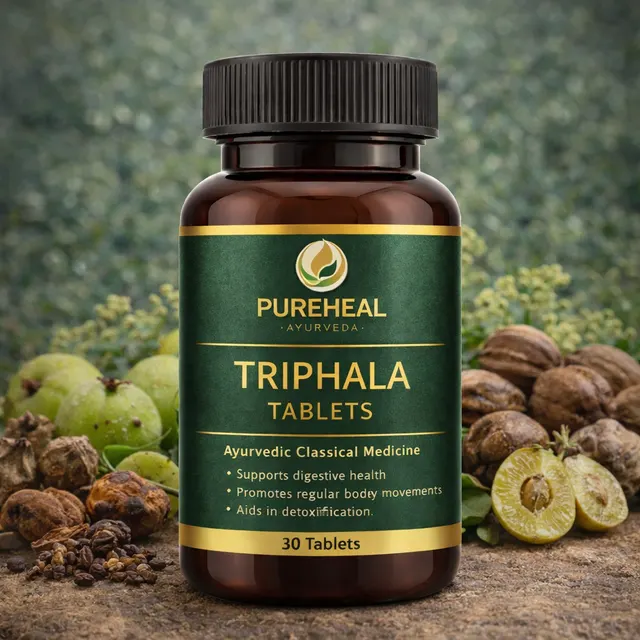
Ayurveda links good health closely with regular digestion and elimination. Heavy wedding-season meals, less water and less movement can make many people constipated in winter. Fibre from vegetables and whole grains, enough water and daily movement help most. Some people also use Triphala, a classical three-fruit formula, under guidance.
9. Dress for the season — and keep your head and feet warm
It sounds obvious, but cold exposure, especially to the head, ears and feet, is something Ayurvedic texts specifically warn against in winter. Layer up in the early morning and late evening, and avoid going out with wet hair.
10. Herbs and extracts — use with guidance
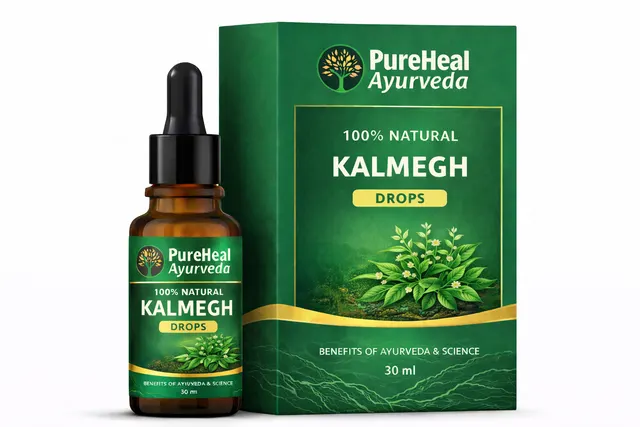
Many people like adding herbal supplements in winter. Popular choices include chyawanprash, giloy, tulsi, curcumin, garlic and kalmegh (Andrographis). PureHeal's range includes Garlic Extract Drops, Curcumin Extract Drops and Kalmegh Extract Drops.
A sensible approach:
- Choose one product at a time rather than stacking five.
- Follow the label dose, and stop if you notice stomach upset, rashes or anything unusual.
- Speak to a qualified Ayurvedic doctor first if you are pregnant, breastfeeding, have a liver or autoimmune condition, or take regular medicines. Garlic and turmeric supplements, for example, may interact with blood thinners.
When a cold is more than a cold
Ayurveda and modern medicine agree on this: some symptoms need a doctor, not home remedies. Seek medical help if you or a family member has:
- High fever, or fever lasting more than three days
- Breathlessness, chest pain or wheezing
- Severe sore throat with difficulty swallowing
- Symptoms in infants, older adults or people with chronic illness that are getting worse
Frequently asked questions
Which season does Ayurveda consider best for building strength?
Early winter (Hemant ritu) and late winter (Shishir ritu). The classical texts describe digestive capacity and natural strength as being at their highest at this time, which is why nourishing food, oil massage and exercise are recommended.
Is it okay to drink kadha every day in winter?
A mild homemade kadha once a day is a common family habit and is fine for most healthy adults. Avoid very strong decoctions several times a day, and check with your doctor if you have acidity, are pregnant or take regular medicines.
Can herbal drops replace vaccines or medicines?
No. Herbal products may support general wellness, but they do not replace vaccines, prescribed medicines or medical treatment. Always follow your doctor's advice for infections.
What is the best winter food for immunity according to Ayurveda?
There is no single best food. Ayurveda recommends warm, freshly cooked, seasonal meals with whole grains, dal, vegetables, a little ghee, amla and kitchen spices like ginger and turmeric — eaten at regular times.
Sources
- Thakkar J et al. (2011). Ritucharya: Answer to the lifestyle disorders. Ayu.
- NCCIH — Garlic and Turmeric
- NCCIH — Ayurvedic Medicine: In Depth
- Ministry of AYUSH, Government of India — ayush.gov.in


Keep reading
Related articles

Seasonal wellness
Ayurvedic Tips for Air Pollution: A Daily Routine for Smog Season
Scratchy throat, watery eyes, dull skin? Here is a simple, sensible daily routine that combines Ayurvedic self-care with proven pollution precautions.
Herbs & formulations
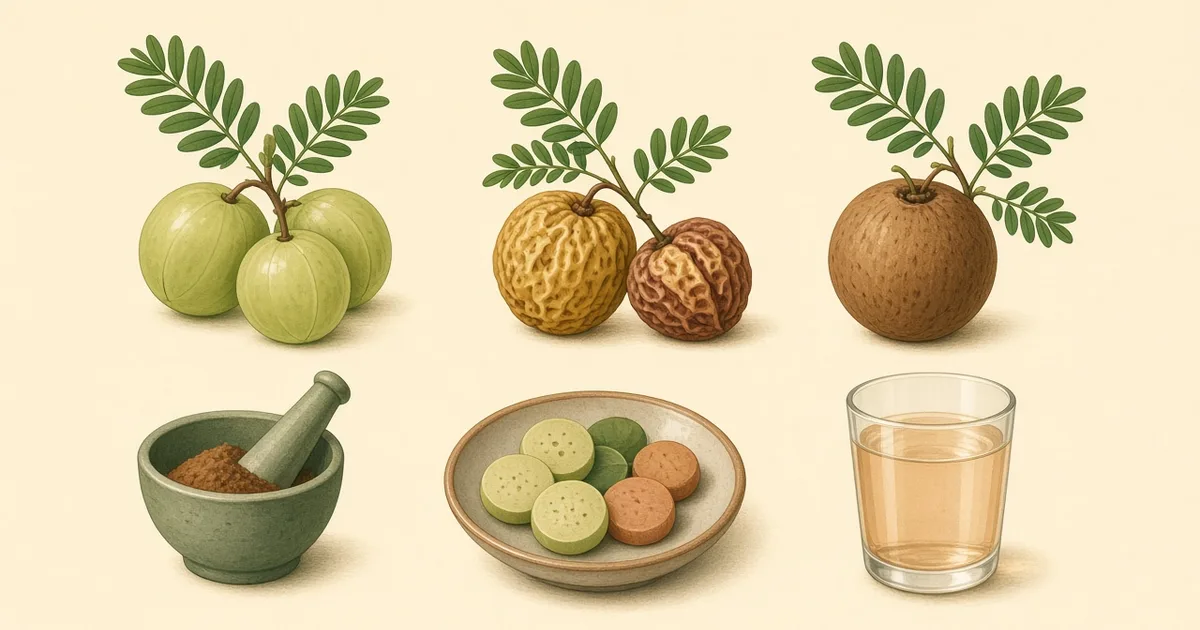
Triphala Benefits: How to Take Triphala Tablets for Digestion and Gentle Detox
Amla, Haritaki and Bibhitaki — three humble fruits that make one of Ayurveda's most-used formulas. Here is how triphala works and how to take it well.

Skin care
Winter Skin Care Tips for Dry Skin: An Ayurvedic Routine That Works
Tight, flaky, itchy skin is classic winter Vata. Here is a gentle routine — oil, bath, soap, moisturiser, food — that keeps skin soft all season.