
Seasonal wellness
Ayurvedic Tips for Air Pollution: A Daily Routine for Smog Season
Scratchy throat, watery eyes, dull skin? Here is a simple, sensible daily routine that combines Ayurvedic self-care with proven pollution precautions.
By the PureHeal Ayurveda editorial team

In this article
- Why smog feels so bad in winter
- Step 1: Reduce exposure first (non-negotiable)
- Step 2: Care for your throat — gargles and steam
- Step 3: Nasya — oiling the nose (only if suitable)
- Step 4: Eat warm, light, easy-to-digest food
- Step 5: Don't forget your skin and eyes
- Step 6: Keep moving — indoors
- Step 7: Herbs — what traditional practice uses (and what we know)
- When to see a doctor
- Frequently asked questions
Every year, as winter sets in, a grey haze settles over Delhi-NCR and many other North Indian cities. Crop-residue smoke, vehicle exhaust, construction dust and cold, still air come together, and the Air Quality Index (AQI) often slips into the "poor" to "severe" range. Along with it come familiar complaints: a scratchy throat, a dry cough, burning eyes, a blocked nose, tiredness and dull, dry skin.
Let us be clear at the start: no herb, kadha or oil can clean the air you breathe. Reducing exposure — staying indoors on bad days, wearing a good mask, using air purifiers — is the most important step. What Ayurveda can offer is a calm, consistent daily routine (dinacharya) that keeps your throat, nose, skin and digestion comfortable while the season lasts. Think of it as self-care that sits alongside, not instead of, medical advice.
Why smog feels so bad in winter
According to the World Health Organization, fine particulate matter (PM2.5) can travel deep into the lungs and is linked with respiratory and heart disease. In winter, cooler air near the ground traps pollutants, so the haze lingers for days.
In Ayurvedic terms, early winter (Hemant ritu) is a season when the air is cold and dry, which tends to aggravate Vata (dryness, roughness) and, with heavy foods and less movement, Kapha (congestion, heaviness). Add dust and smoke, and it is easy to see why the throat feels dry and the chest heavy. The Ayurvedic approach is therefore about keeping the body's surfaces — nose, throat, skin — gently moist and clean, keeping digestion strong, and not adding extra heaviness.
Step 1: Reduce exposure first (non-negotiable)
Before any herbal tip, follow the basics that health authorities recommend:
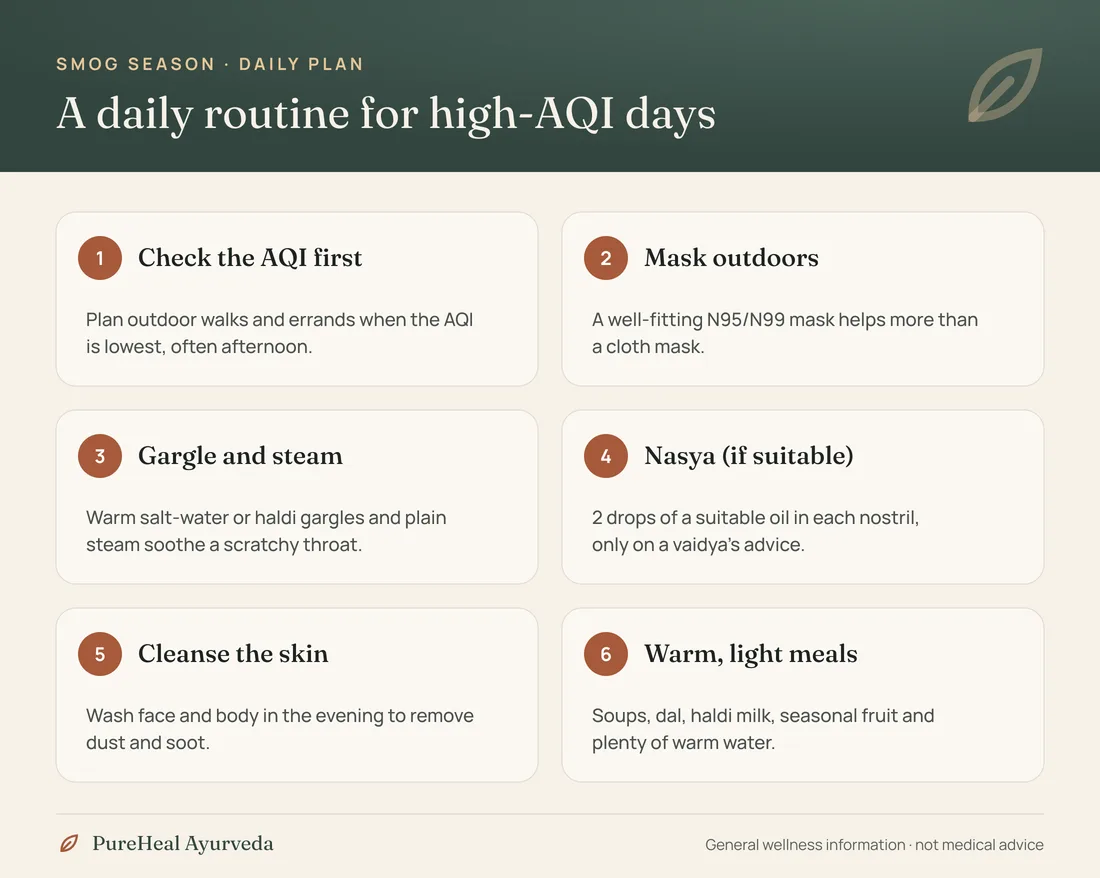
- Check the AQI daily on the CPCB's Sameer app or website and plan outdoor activity accordingly.
- Wear a well-fitting N95/N99 mask outdoors on high-AQI days. A loose cloth or surgical mask offers much less protection against fine particles.
- Shift your morning walk or yoga indoors when pollution is severe. Early mornings in winter are often the smoggiest.
- Keep windows closed during peak pollution hours, and use an air purifier if you can.
- Avoid adding indoor smoke — incense sticks, mosquito coils and wood or coal fires all add particles at home.
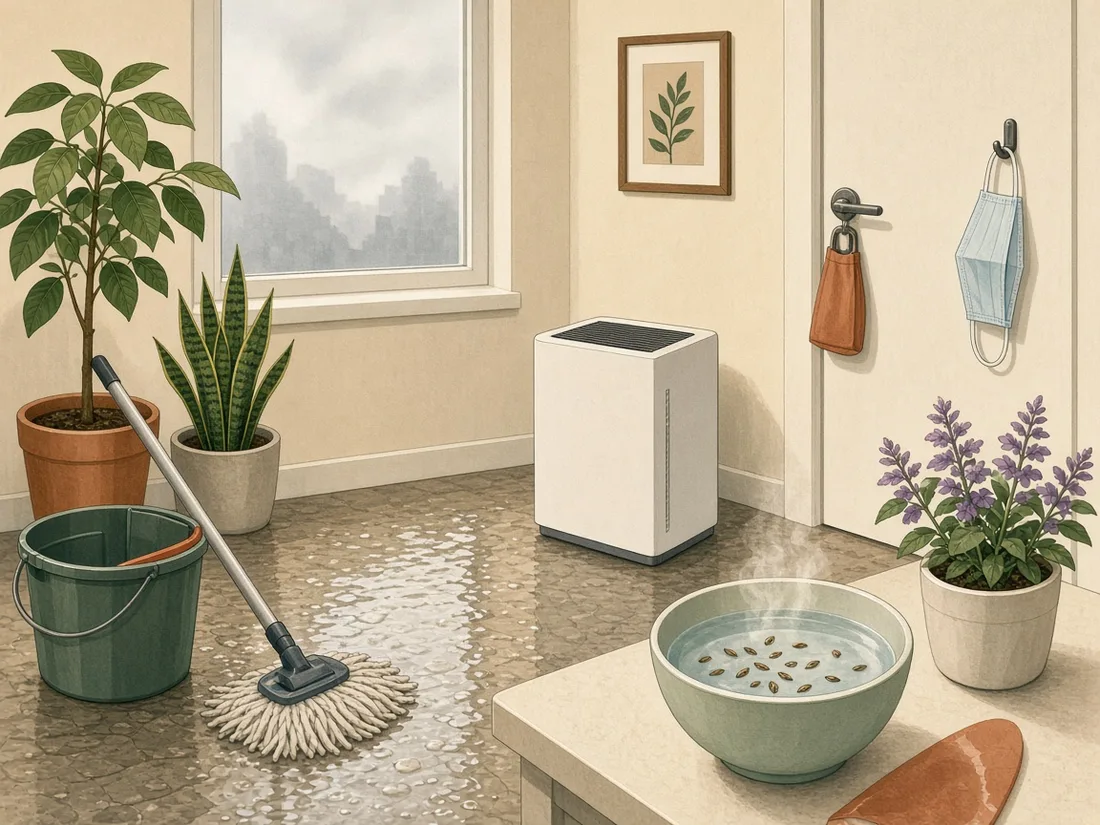
- Damp-mop floors and wipe surfaces rather than dry-sweeping, which stirs dust back into the air.
Step 2: Care for your throat — gargles and steam
A simple warm salt-water gargle is one of the oldest home remedies in India, and in Ayurveda, holding or swishing liquids in the mouth is described as kavala and gandusha. It feels soothing for a dry, scratchy throat.
- Salt-water gargle: half a teaspoon of salt in a glass of warm (not hot) water, gargle morning and night.
- Haldi gargle: a pinch of turmeric in warm water is a popular variation.
- Plain steam: inhaling steam from a bowl of hot water for a few minutes can make a dry, blocked nose feel more comfortable. Some families add a few ajwain seeds or tulsi leaves; keep your face at a safe distance and never use this for small children without supervision.
These are comfort measures. If you have a cough lasting more than three weeks, chest pain, wheezing or breathlessness, see a doctor promptly.
Step 3: Nasya — oiling the nose (only if suitable)
Nasya is the classical Ayurvedic practice of putting medicated oil drops into the nostrils. In daily routine (pratimarsha nasya), just one or two drops of a suitable oil such as Anu Taila or plain sesame oil are used in each nostril. The traditional idea is that a lightly oiled nasal lining feels less dry and irritated.
Research on nasya is still limited and mostly small studies, so treat it as a comfort practice. It is not suitable for everyone — avoid it during a cold with heavy discharge, fever, right after meals, during pregnancy without advice, and for children unless a doctor recommends it. Please learn the right oil and method from a qualified Ayurvedic doctor before you start.
Step 4: Eat warm, light, easy-to-digest food
Ayurveda considers good digestion (agni) the foundation of resilience. In smog season:
- Favour freshly cooked, warm meals — moong dal, khichdi, vegetable soups, seasonal greens, rotis made from mixed grains.
- Use kitchen spices that Indian homes have always relied on: haldi, ginger, black pepper, jeera, tulsi and garlic.
- Include vitamin-C rich seasonal fruits such as amla, oranges and guavas.
- Sip warm water through the day. Winter thirst is low, but dry air and a dry throat need fluids.
- Go easy on very heavy, fried and sugary foods, which Ayurveda says increase Kapha-type heaviness.
Golden milk (haldi doodh) at night is a comforting ritual for many families. Turmeric's main compound, curcumin, is widely studied, but the NCCIH notes that strong evidence for most health uses is still lacking — so enjoy it as food, not medicine.
Step 5: Don't forget your skin and eyes
Your skin is exposed to the same dust and soot as your lungs. Many people notice dullness, clogged pores and dryness during smog season.
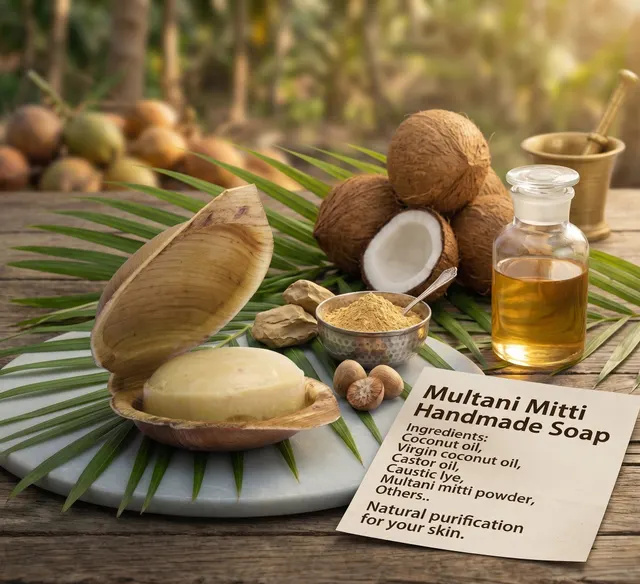
- Cleanse every evening. Wash your face and body after coming home to remove the day's grime. A gentle handmade soap with natural oils works well for many skin types — for example, PureHeal's Charcoal Glow Handmade Soap for oily or congested skin, or the Multani Mitti Handmade Soap for oil control.
- Moisturise right after. Winter plus pollution dries skin quickly. Pat dry and apply a moisturiser or a little coconut oil while skin is still slightly damp. Our winter skin care guide covers this in detail.
- Rinse your eyes with clean, cool water if they feel gritty, and avoid rubbing them. Persistent redness or pain needs an eye doctor.
Step 6: Keep moving — indoors
Exercise supports overall health, but heavy breathing outdoors on a high-AQI day means inhaling more pollutants. On bad days, move indoors: yoga asanas, surya namaskar, a short home workout or walking around the house. Gentle pranayama such as anulom-vilom is popular, but practise it in clean indoor air rather than on a smoggy terrace.
Step 7: Herbs — what traditional practice uses (and what we know)
Many Indian families turn to herbs in the pollution season. Here is a balanced look at a few that come up most often:
| Herb | Traditional Ayurvedic use | What research says |
|---|---|---|
| Tulsi (holy basil) | Respiratory comfort, kadha ingredient | Promising but mostly small studies |
| Haldi (turmeric) / curcumin | Throat gargles, golden milk | Widely studied; strong evidence for most uses is lacking (NCCIH) |
| Kalmegh (Andrographis) | Fever, liver and "detox" support | Studied for cold symptoms; can cause side effects, so use with guidance (review) |
| Garlic | Everyday immunity food | Evidence for preventing colds is limited (NCCIH) |
If you want to use herbal extracts like Kalmegh Extract Drops or Curcumin Extract Drops, speak to an Ayurvedic doctor first — especially if you are pregnant, on blood thinners, diabetes or blood-pressure medicines, or have a liver condition.
When to see a doctor
Please do not self-treat these symptoms — seek medical care quickly:
- Breathlessness, wheezing or chest tightness
- A cough lasting more than three weeks, or coughing blood
- High fever, or symptoms that keep getting worse
- Worsening of existing asthma, COPD or heart disease
Children, older adults, pregnant women and people with heart or lung conditions are most vulnerable to pollution and should be extra careful on high-AQI days.
Frequently asked questions
Can Ayurveda protect my lungs from pollution?
No herbal routine can filter the air or undo pollution's effects. Ayurveda's daily routines — gargles, steam, warm food, good sleep — can make your throat, nose and skin feel more comfortable, but reducing exposure with masks, purifiers and staying indoors on bad days matters most.
Is it safe to do nasya every day?
Daily nasya with one or two drops of a suitable oil is a classical practice, but it is not right for everyone. Avoid it during a cold with heavy discharge, fever or pregnancy unless advised, and learn the correct oil and technique from a qualified Ayurvedic doctor.
Should I go for a morning walk when the AQI is high?
On days when the AQI is "poor" or worse, it is wiser to exercise indoors. Winter mornings are often the smoggiest part of the day. Check the AQI and choose the cleanest time or an indoor alternative.
Which soap is best for pollution and dust on the skin?
Choose a gentle cleanser that removes dirt without over-drying. Handmade soaps made with natural oils, such as charcoal or multani mitti variants, are popular choices for oily or congested skin. Always follow cleansing with a moisturiser in winter.
Sources
- World Health Organization — Ambient (outdoor) air quality and health
- WHO — Air pollution health topic
- Central Pollution Control Board — National Air Quality Index
- NCCIH (US National Institutes of Health) — Turmeric, Garlic
- Worakunphanich W. et al. (2021) — Safety of Andrographis paniculata: a systematic review




Keep reading
Related articles

Seasonal wellness
How to Boost Immunity in Winter the Ayurvedic Way: 10 Daily Habits
Winter is the season Ayurveda calls the time of strength. Here is how to use it well — with food, routine, movement and a few trusted kitchen herbs.

Skin care
Winter Skin Care Tips for Dry Skin: An Ayurvedic Routine That Works
Tight, flaky, itchy skin is classic winter Vata. Here is a gentle routine — oil, bath, soap, moisturiser, food — that keeps skin soft all season.

Sleep & stress
Can't Sleep? 10 Ayurvedic Tips for Better Sleep, Naturally
Late-night scrolling, racing thoughts, 3 am wake-ups — Ayurveda calls it a Vata problem. Here is a calm, practical routine to help you sleep better.