
Skin care
Winter Skin Care Tips for Dry Skin: An Ayurvedic Routine That Works
Tight, flaky, itchy skin is classic winter Vata. Here is a gentle routine — oil, bath, soap, moisturiser, food — that keeps skin soft all season.
By the PureHeal Ayurveda editorial team

In this article
- Why skin gets so dry in winter
- Step 1: Abhyanga — warm oil before you bathe
- Step 2: Bathe warm, short and gentle
- Step 3: Choose a gentle, oil-rich soap
- Step 4: Moisturise within three minutes
- Step 5: Eat for your skin
- Step 6: Don't skip sunscreen in winter
- Step 7: Care for the air around you
- Quick fixes for problem areas
- When dry skin needs a doctor
- Frequently asked questions
By late November, most of us notice it: skin that feels tight after a bath, white flaky patches on the shins, cracked heels, rough elbows and lips that never seem moisturised enough. Add hot-water baths, heaters and (in many cities) smog, and winter can be tough on skin.
In Ayurveda, this picture is classic Vata imbalance. Vata's qualities are cold, dry, light and rough — exactly the qualities of winter air. The Ayurvedic answer is equally logical: bring in the opposite qualities — warmth, oil, softness and nourishment — both on the skin and through diet. Interestingly, this matches what dermatologists recommend for dry skin today. Here is a simple routine that combines both.
Why skin gets so dry in winter
Your skin's outermost layer holds water with the help of natural oils (lipids). In winter, low humidity pulls moisture out, while long hot baths and harsh soaps strip away those protective oils. The result is the familiar tightness, itching and flaking. The American Academy of Dermatology lists short, warm (not hot) baths, gentle cleansers and immediate moisturising as the most important fixes.
Step 1: Abhyanga — warm oil before you bathe
Abhyanga, or self-massage with warm oil, is one of the most recommended daily practices in Ayurvedic texts, especially in winter. It is simple:
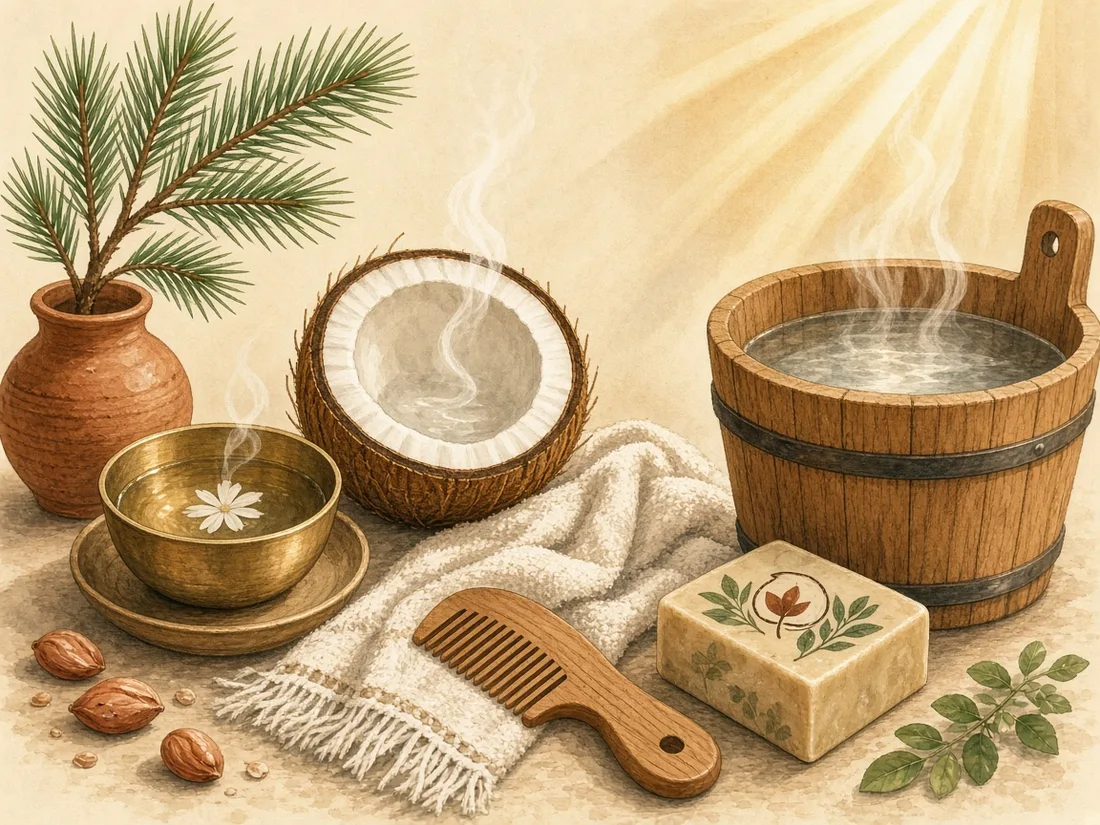
- Warm 2–3 tablespoons of oil by placing the bowl in hot water for a few minutes. Test on your wrist — it should feel comfortably warm.
- Massage it into your body with gentle strokes for 5–10 minutes: long strokes on arms and legs, circular strokes on joints, and extra attention to heels, elbows and knees.
- Leave it on for a few minutes, then take a warm bath.
Which oil? Sesame (til) oil is the classical winter choice for Vata. Coconut oil is lighter and widely used in Kerala and South India; it suits people who feel sesame is too heavy or warming. If you have very oily, acne-prone or sensitive skin, patch-test first and keep oil away from breakouts.
A small pilot study found that people reported lower stress after an Ayurvedic abhyanga massage session (Basler, 2011) — a nice bonus, though the study was very small.
Step 2: Bathe warm, short and gentle
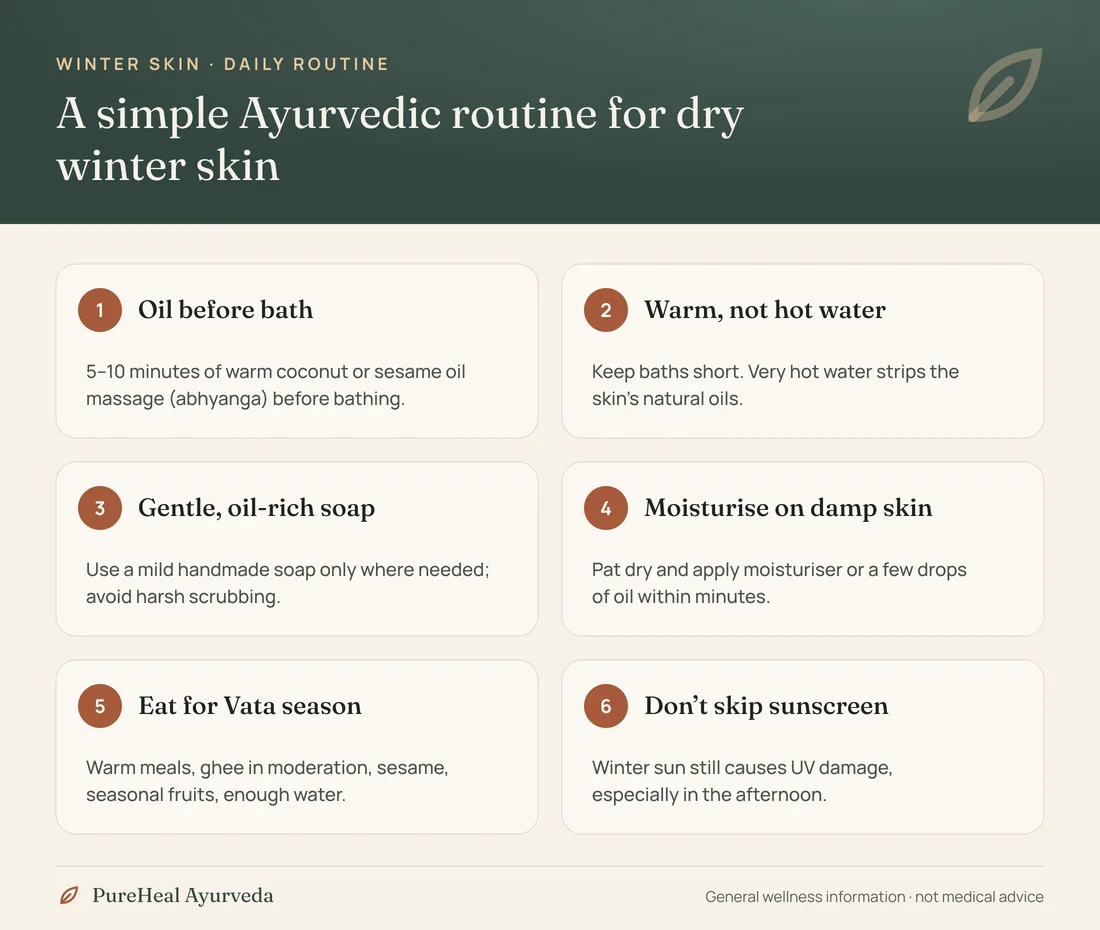
- Keep baths or showers to 5–10 minutes in warm, not hot, water. Very hot water feels lovely in winter but strips skin oils fast.
- Use soap only where needed — underarms, groin, feet and visibly dirty areas. Arms, legs and back often need just water, especially after abhyanga.
- Pat dry with a soft towel instead of rubbing.
Step 3: Choose a gentle, oil-rich soap
Many regular bathing bars are quite alkaline and heavily foaming, which can feel drying in winter. Handmade soaps made with plant oils like coconut, virgin coconut and castor oil are often gentler, because the oils give a creamy lather and leave skin feeling softer. Look for:
- Short, recognisable ingredient lists based on natural oils
- No harsh fragrances if your skin is sensitive
- Ayurvedic herbs traditionally used in skin care
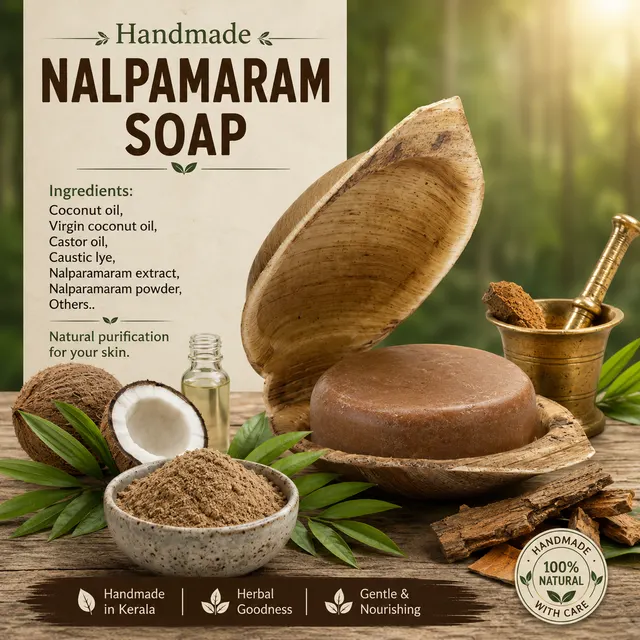
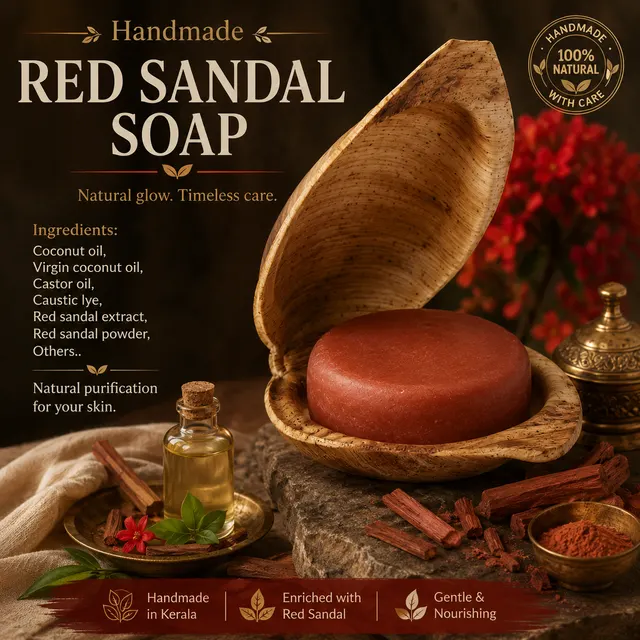
At PureHeal, our handmade soaps are made in Kerala with coconut, virgin coconut and castor oils, each with a different herbal focus:
| Soap | Traditional ingredient | Good for winter if your skin is… |
|---|---|---|
| Nalpamaram Handmade Soap | Nalpamaram (four-tree bark blend used in Kerala skin care) | Dry, dull or easily irritated |
| Red Sandal Handmade Soap | Red sandalwood (rakta chandana) | Dull, uneven-looking, wants a soothing feel |
| Kasturi Manjal Handmade Soap | Kasturi manjal (wild turmeric) | Normal to combination, wants a natural glow |
| Charcoal Glow Handmade Soap | Activated charcoal | Oily or congested, city pollution |
Not sure which suits you? The Handmade Soap Combo lets you try five.
Step 4: Moisturise within three minutes
This is the step most people miss. Dermatologists advise applying moisturiser while skin is still slightly damp, so it locks in water. Use a cream or ointment-style moisturiser on very dry areas, or a few drops of coconut oil mixed into your lotion. Reapply on hands after every wash.
For cracked heels, massage a little warm oil or ghee into the heels at bedtime and wear cotton socks. For lips, use a plain balm or a dab of ghee — and avoid licking them.
Step 5: Eat for your skin
Ayurveda always connects skin to digestion and diet. In winter:
- Include healthy fats: a little ghee, sesame seeds, nuts and seeds.
- Eat seasonal fruits and vegetables: amla, oranges, carrots, beetroot, leafy greens.
- Drink enough water even when you don't feel thirsty; warm water or herbal teas count.
- Go easy on very dry, packaged snacks and excess tea or coffee, which Ayurveda says increase dryness.
Step 6: Don't skip sunscreen in winter
The winter sun feels gentle, but UV rays still reach your skin, especially during long afternoons on a terrace or a winter holiday in the hills, where snow reflects UV. The AAD recommends a broad-spectrum sunscreen with SPF 30 or more on exposed skin. A common myth is that natural or Ayurvedic products "don't need" sunscreen — they do. Oils like kumkumadi or coconut oil are not a substitute for sunscreen.
Step 7: Care for the air around you
- Keep heaters at a moderate setting and not pointed at your face or body.
- A bowl of water near the heater or a humidifier can help in very dry rooms.
- Wear soft cotton next to the skin if wool makes you itch.
Quick fixes for problem areas
- Hands: keep a small tube of hand cream by the sink and apply after every wash; wear gloves while washing utensils.
- Scalp: a gentle warm-oil massage an hour before hair wash can help a dry, itchy winter scalp; avoid very hot water on the head.
- Feet: soak tired, cracked feet in warm water for ten minutes, pat dry and apply oil or a thick cream.
When dry skin needs a doctor
See a dermatologist if your skin:
- Cracks and bleeds, or shows signs of infection (pus, increasing redness, warmth)
- Itches so much that it disturbs sleep
- Has thick, scaly or red patches that don't improve with moisturising — this could be eczema, psoriasis or a fungal infection that needs proper treatment
Frequently asked questions
Which oil is best for abhyanga in winter?
Sesame oil is the classical Ayurvedic choice for winter and Vata-type dryness. Coconut oil is lighter and suits many people in warmer regions or with Pitta-type skin. Patch-test any new oil and avoid applying it on active acne.
Is it okay to bathe with hot water in winter?
Warm water is fine, but very hot water and long baths strip the skin's natural oils and make dryness worse. Keep baths short and warm, and moisturise immediately afterwards.
Are handmade soaps better for dry skin?
Handmade soaps made with plant oils such as coconut and castor oil often feel gentler and less drying than heavily foaming regular bars. Still, any soap can dry skin if overused — use it only where needed and moisturise afterwards.
Do I need sunscreen in winter?
Yes. UV rays are present all year, and dermatologists recommend a broad-spectrum SPF 30+ sunscreen on exposed skin whenever you are outdoors, including in winter.
Sources
- American Academy of Dermatology — Dermatologists' top tips for relieving dry skin
- Basler AJ (2011). Pilot study investigating the effects of Ayurvedic Abhyanga massage on subjective stress experience. J Altern Complement Med.
- NCCIH — Ayurvedic Medicine: In Depth
Shop related products
From the PureHeal range


Keep reading
Related articles

Seasonal wellness
Ayurvedic Tips for Air Pollution: A Daily Routine for Smog Season
Scratchy throat, watery eyes, dull skin? Here is a simple, sensible daily routine that combines Ayurvedic self-care with proven pollution precautions.
Seasonal wellness
How to Boost Immunity in Winter the Ayurvedic Way: 10 Daily Habits
Winter is the season Ayurveda calls the time of strength. Here is how to use it well — with food, routine, movement and a few trusted kitchen herbs.

Sleep & stress
Can't Sleep? 10 Ayurvedic Tips for Better Sleep, Naturally
Late-night scrolling, racing thoughts, 3 am wake-ups — Ayurveda calls it a Vata problem. Here is a calm, practical routine to help you sleep better.