
Digestion
Shankha Vati Benefits, Uses & How to Take It for Gas, Acidity and Indigestion
Wedding season, heavy meals, late dinners — and then the bloating. Here is what Shankha Vati is, how Ayurveda uses it, and how to take it safely.
By the PureHeal Ayurveda editorial team
In this article
- What is Shankha Vati?
- How Ayurveda describes Shankha Vati
- Possible uses of Shankha Vati
- How to take Shankha Vati
- Important cautions
- Red flags — when gas isn't "just gas"
- Diet and lifestyle tips for better digestion
- A simple wedding-season plan for your stomach
- Shankha Vati vs Chitrakadi Vati vs Triphala
- Frequently asked questions
November and December in India mean weddings, sangeet nights, parties and back-to-back celebrations — and with them, rich gravies, fried snacks, mithai and dinners at 11 pm. It's no surprise that searches for "gas," "bloating" and "indigestion remedies" climb at this time of year.
Among the classical Ayurvedic formulations for digestive discomfort, Shankha Vati is one of the best known. Here is a clear, practical guide to what it is, how it is traditionally used and how to use it sensibly.
What is Shankha Vati?
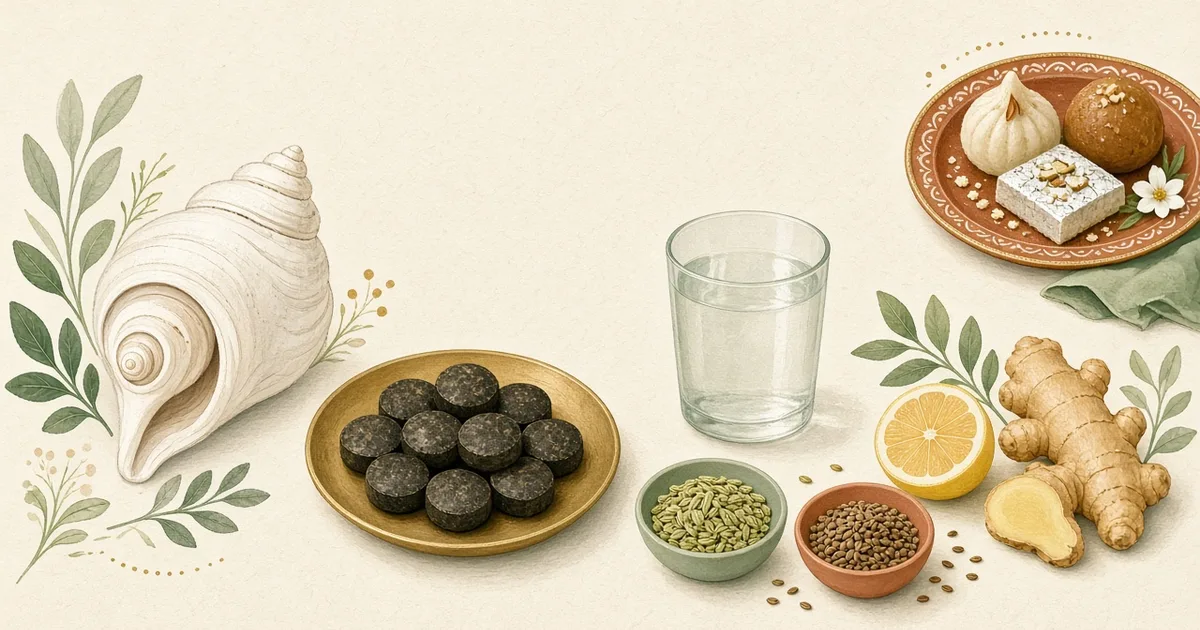
Shankha Vati is a classical herbo-mineral Ayurvedic tablet (vati = tablet). Its key ingredient is Shankha Bhasma — conch shell that has been purified and processed through traditional methods into a fine calcined powder. It is combined with digestive herbs and salts. Classical recipes typically include ingredients such as:
- Shankha Bhasma (processed conch shell)
- Imli kshar (tamarind alkali) and panch lavan (five salts)
- Hing (asafoetida)
- Trikatu — sonth (dry ginger), kali mirch (black pepper) and pippali (long pepper)
- Nimbu swaras (lemon juice) used in processing
Some classical versions also include specially purified (shodhit) mineral and herbal ingredients. Formulations differ between manufacturers, so always read the full ingredient list on the label of the product you buy.
How Ayurveda describes Shankha Vati
In Ayurvedic terms, Shankha Vati is described as:
- Deepana — kindles the digestive fire (agni) and appetite
- Pachana — helps digest undigested food (ama)
- Shoolaghna — relieves colicky abdominal pain
- Vatanulomana — supports the normal downward movement of Vata (gas)
Traditionally it is used for indigestion (ajirna), bloating and gas (adhmana), abdominal colic, loss of appetite and the heavy, uncomfortable feeling after overeating. Shankha Bhasma itself has been studied in a small clinical comparison of two purification methods (Ranade et al., 2013), but high-quality modern trials on Shankha Vati as a formulation are limited — most of its use is based on classical texts and clinical experience.
Possible uses of Shankha Vati
Gas and bloating after heavy meals
The most common reason people reach for Shankha Vati is the bloated, tight-belly feeling after a large or rich meal. Its warming, Vata-settling ingredients like hing and trikatu are traditionally used for exactly this.
Indigestion and heaviness
When food seems to "sit" in the stomach, with burping and sluggishness, Ayurveda calls it ajirna or mandagni (weak digestive fire). Shankha Vati's deepana-pachana action is traditionally used to support digestion in this situation.
Loss of appetite
As a deepana formulation, it is sometimes used when appetite is low because of sluggish digestion.
What about acidity?
Here it is worth being careful. Shankha Bhasma is calcium-based and is traditionally considered to counter excess acid, and Shankha Vati is sometimes used for hyperacidity. But the formula also contains warming, pungent herbs (trikatu, hing). People with strong Pitta-type acidity, burning or ulcers may find warming formulas aggravating. This is precisely why an Ayurvedic doctor's assessment matters — they may suggest a different formula for burning-type acidity.
How to take Shankha Vati
General traditional guidance (always follow your product label and doctor's advice):
- Usually taken after meals with warm water, one or two times a day, as directed.
- It is meant for short-term use, not as a permanent daily habit.
- Don't exceed the recommended dose, and don't combine it with several other digestive formulas on your own.
- Keep out of reach of children; not for children unless prescribed.
Important cautions
- Not during pregnancy or breastfeeding, unless specifically prescribed.
- Contains salts — people on salt-restricted diets (high BP, kidney or heart conditions) should ask their doctor.
- Herbo-mineral formulations should be taken from reputable manufacturers in recommended doses and durations. The US NCCIH has noted that some Ayurvedic products tested abroad contained lead, mercury or arsenic — another reason to use trusted brands, short courses and medical supervision.
- If you have peptic ulcers, severe burning, or take regular medicines, consult a doctor first.
Red flags — when gas isn't "just gas"
Please see a doctor promptly rather than self-treating if you have:
- Severe or persistent abdominal pain
- Vomiting blood or black, tarry stools
- Difficulty swallowing or unexplained weight loss
- Heartburn most days for more than three weeks, or new symptoms after age 55
The NHS heartburn guide and indigestion guide explain when digestive symptoms need medical attention. Chest pain that feels like "gas" can occasionally be a heart problem — never ignore chest pain with sweating or breathlessness.
Diet and lifestyle tips for better digestion
Ayurveda would say: no tablet can fix daily habits that weaken agni. These simple changes often help more than any formula:
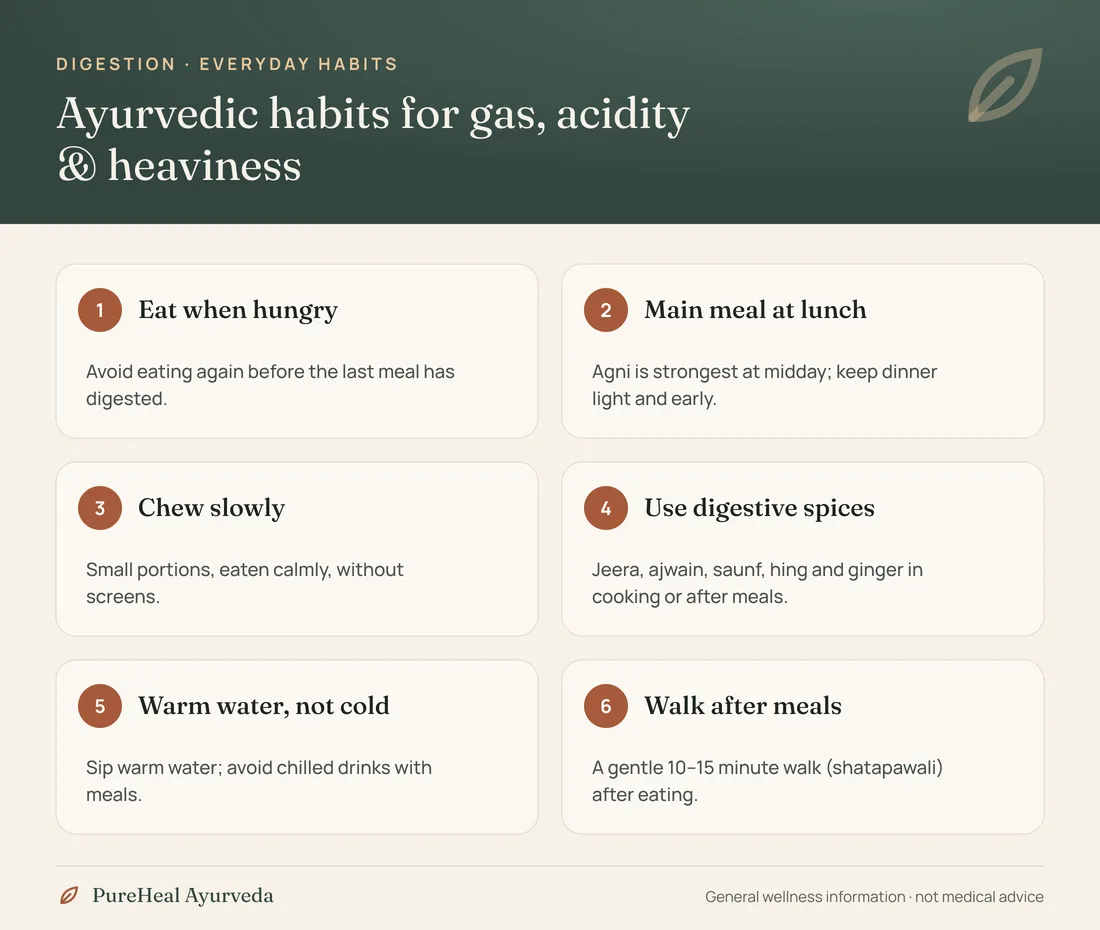
- Eat when you're actually hungry, and avoid eating again before your last meal is digested.
- Make lunch your main meal — Ayurveda says agni is strongest at midday. Keep dinner light and early.
- Chew slowly and avoid eating in front of screens.
- Sip warm water; avoid ice-cold drinks with meals.
- Use kitchen digestives: jeera, ajwain, saunf, hing and ginger in cooking, or a little saunf after meals.
- Take a gentle 10–15 minute walk after meals (shatapawali).
- At weddings and parties, choose a few dishes you really enjoy instead of trying everything.
A simple wedding-season plan for your stomach
If you have several functions lined up this month, a little planning helps:
- Eat a light, early meal at home before an evening function so you don't arrive starving.
- Start with soup or salad, then pick two or three dishes you really want rather than tasting everything.
- Go easy on fried starters and sweets — enjoy one portion, slowly.
- Drink water through the evening, and limit alcohol and fizzy drinks.
- Walk around after eating rather than sitting straight down.
- Keep the next day light: khichdi, moong dal, curd-rice or vegetable soup, with warm water and a little jeera or ajwain.
Ayurveda calls this kind of next-day reset langhana — giving the digestive system lighter work so it can recover.
Shankha Vati vs Chitrakadi Vati vs Triphala
People often confuse these three digestive classics:
| Formulation | Traditionally used mainly for |
|---|---|
| Shankha Vati | Gas, bloating, colicky pain, indigestion after heavy meals |
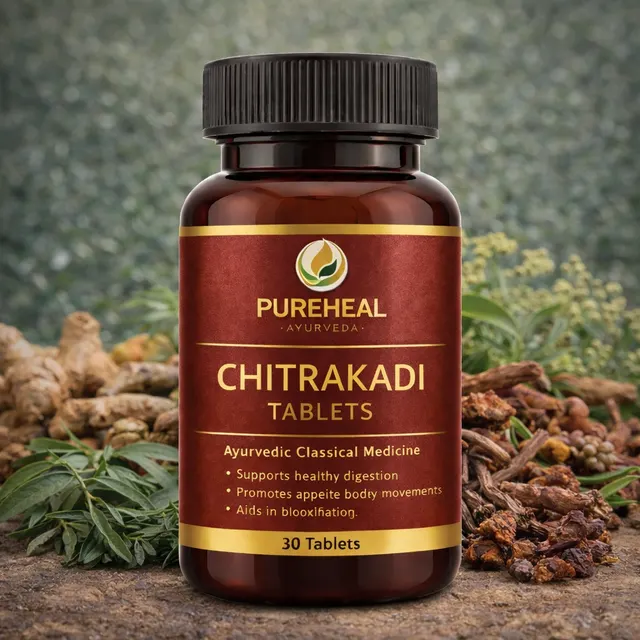
| Chitrakadi Vati | Sluggish digestion, low appetite, ama (undigested residue) |
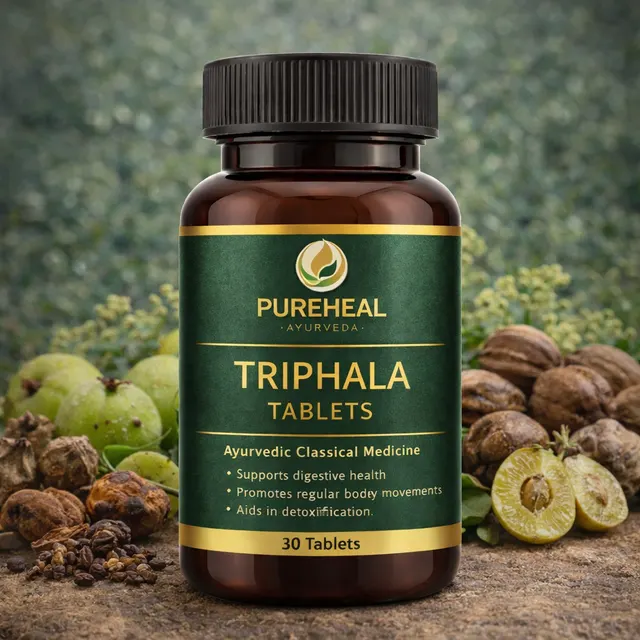
| Triphala | Regular bowel movements, gentle daily digestive support |
Read our detailed Triphala benefits guide to learn more about the three-fruit formula.
Frequently asked questions
What is Shankha Vati used for?
Shankha Vati is a classical Ayurvedic tablet traditionally used for gas, bloating, indigestion, colicky abdominal pain and loss of appetite. It is meant for short-term use under guidance.
When should Shankha Vati be taken — before or after food?
It is usually taken after meals with warm water, as directed on the label or by an Ayurvedic doctor.
Can I take Shankha Vati daily?
It is generally recommended for short courses rather than long-term daily use. If you have frequent digestive problems, see a doctor to find the underlying cause.
Is Shankha Vati good for acidity?
Shankha Bhasma is traditionally used for excess acid, but the formula also contains warming spices that may not suit burning-type acidity or ulcers. Ask a qualified Ayurvedic doctor which formulation suits your symptoms.
Sources
- Ranade M et al. (2013). Comparison of two purification products of shankha bhasma: a prospective randomized control trial. J Nat Sci Biol Med.
- NCCIH — Ayurvedic Medicine: In Depth (safety of Ayurvedic products)
- NHS — Heartburn and acid reflux and Indigestion
Shop related products
From the PureHeal range
Keep reading
Related articles
Herbs & formulations
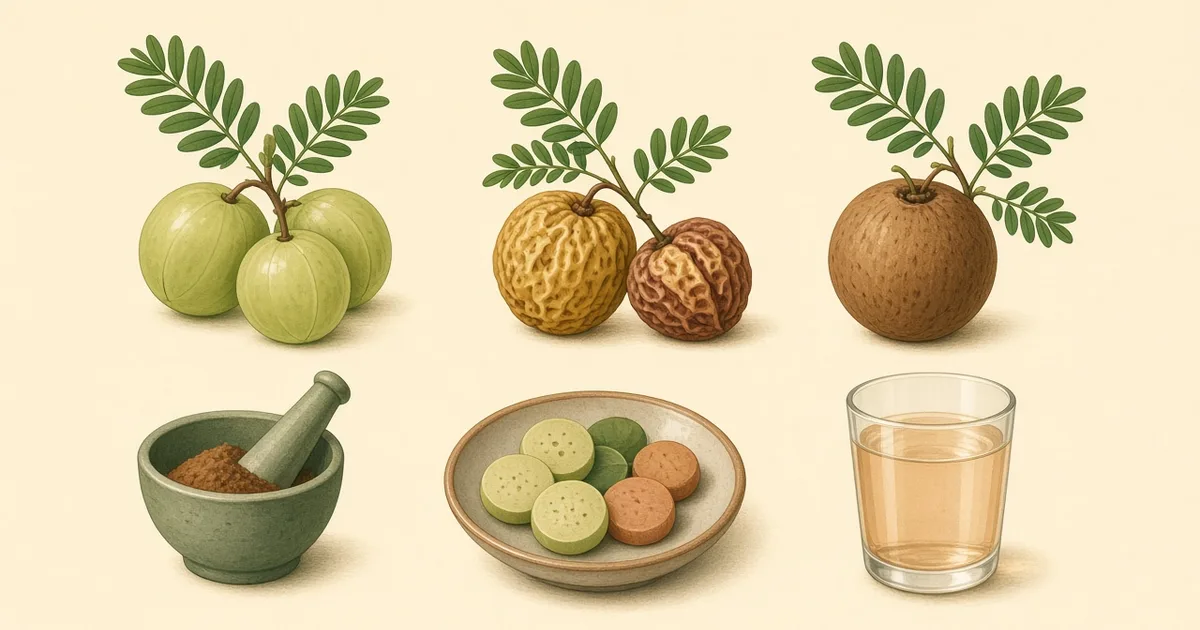
Triphala Benefits: How to Take Triphala Tablets for Digestion and Gentle Detox
Amla, Haritaki and Bibhitaki — three humble fruits that make one of Ayurveda's most-used formulas. Here is how triphala works and how to take it well.
Seasonal wellness
How to Boost Immunity in Winter the Ayurvedic Way: 10 Daily Habits
Winter is the season Ayurveda calls the time of strength. Here is how to use it well — with food, routine, movement and a few trusted kitchen herbs.
Joint & metabolic health
High Uric Acid and Joint Pain in Winter: Ayurvedic Diet and Lifestyle Tips
Winter, wedding feasts and less water can be a tough mix for uric acid. Here is a practical, India-friendly guide to diet and lifestyle — and where…