
Joint & metabolic health
High Uric Acid and Joint Pain in Winter: Ayurvedic Diet and Lifestyle Tips
Winter, wedding feasts and less water can be a tough mix for uric acid. Here is a practical, India-friendly guide to diet and lifestyle — and where Ayurveda fits in.
By the PureHeal Ayurveda editorial team
In this article
"Uric acid badh gaya hai" has become a very common line on Indian lab reports. For some people it means nothing more than a number to watch; for others it means sudden, intensely painful swelling of the big toe, ankle or knee — gout. Winter can make things trickier: we drink less water, eat heavier festive and wedding food, move less and sometimes drink more alcohol at celebrations.
This guide covers what high uric acid means, the lifestyle steps backed by medical guidance, and how Ayurveda approaches the condition it calls vatarakta.
What is uric acid, and when is it a problem?
Uric acid is a natural waste product formed when the body breaks down purines — substances found in our own cells and in certain foods. Normally, it dissolves in the blood and is passed out through the kidneys. When there's too much uric acid (or the kidneys don't clear enough), it can form needle-like crystals in the joints, causing gout.
According to the NHS, gout causes sudden, severe joint pain — usually in the big toe, but sometimes in the feet, ankles, knees, hands, wrists or elbows — with hot, swollen, red skin over the joint. Risk is higher if you:
- are overweight
- drink alcohol
- have been through the menopause
- take certain medicines such as diuretics (water tablets) or some blood-pressure medicines
- have high cholesterol, high blood pressure, kidney problems or diabetes
Common triggers for an attack include drinking too much alcohol, eating a very large meal, getting dehydrated, injury or illness with fever.
How Ayurveda understands it: Vatarakta
In Ayurveda, gout-like joint pain is closely related to vatarakta — a condition in which aggravated Vata combines with vitiated rakta (blood). Classical texts link it to excessive heavy, sour, salty, fried and fermented foods, alcohol, sleeping in the day, irregular routines and a sedentary lifestyle — a description that matches many modern risk factors remarkably well.
The classical text Sharangadhara Samhita mentions Gokshuradi Guggulu for vatarakta, and it remains a commonly prescribed formula today. Ayurvedic management traditionally combines diet, lifestyle, herbs and, in some cases, therapies like panchakarma — all individualised by a physician.
Lifestyle steps that genuinely help
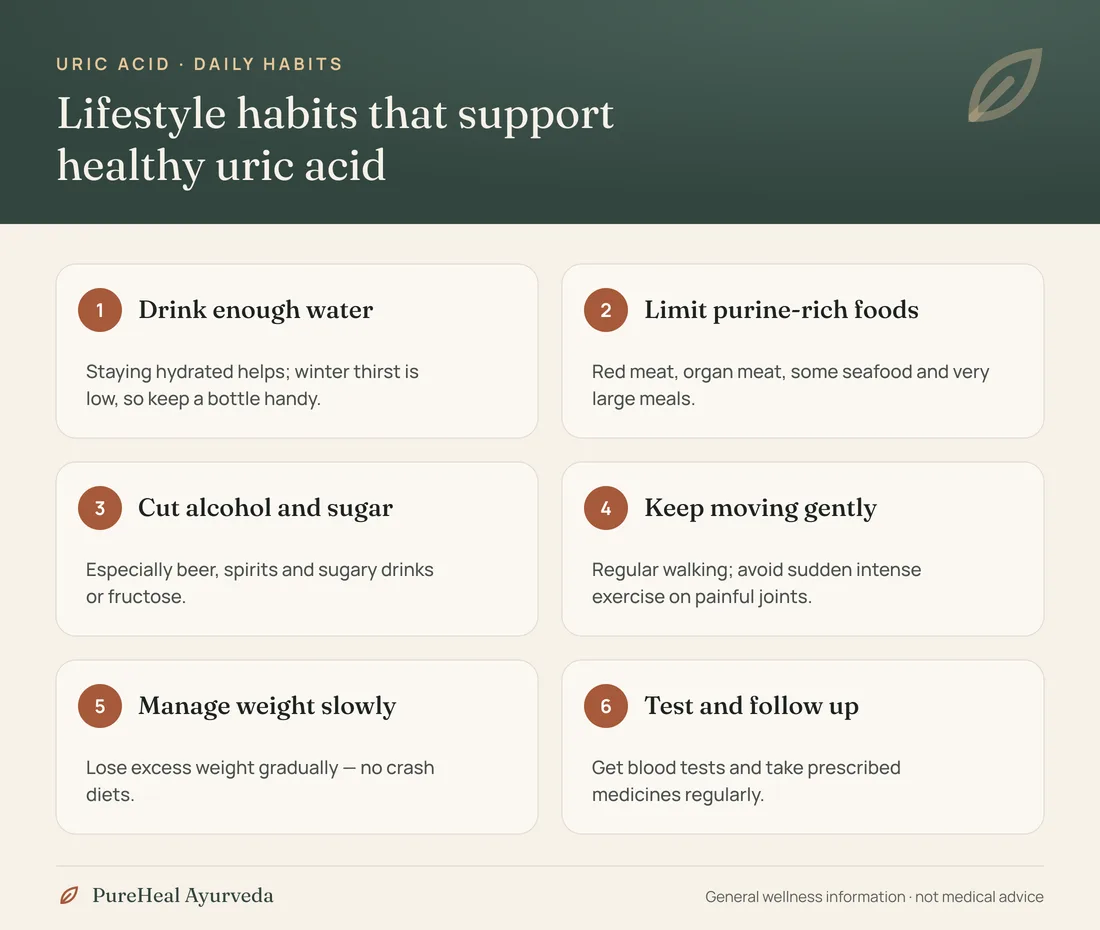
The NHS lists these as ways to help prevent gout attacks, and they're very compatible with Ayurveda:
1. Drink enough water — especially in winter
Dehydration is a known trigger for gout attacks. In winter, thirst drops, so keep a bottle or flask of warm water near you and sip regularly. Unless your doctor has restricted fluids (for example, in some heart or kidney conditions), aim to keep your urine pale.
2. Watch purine-rich foods and large meals
Your doctor may give you a specific list, but in general, people with high uric acid are often advised to limit:
- Red meat and organ meats (liver, kidney)
- Some seafood, such as sardines, anchovies, shellfish and prawns
- Very large, heavy meals — a real risk in wedding season
- Meat-based gravies and stocks
Vegetarian foods sometimes get blamed too, but modern guidance is much more relaxed about most plant foods. Dal, vegetables and whole grains are generally considered fine in normal portions as part of a balanced diet — ask your doctor or dietitian about your specific situation rather than cutting out entire food groups.
3. Cut back on alcohol and sugary drinks
Alcohol — especially beer and spirits — raises uric acid. The NHS suggests having some alcohol-free days each week. Sugary drinks and snacks high in fructose can also raise uric acid. Ayurveda, too, lists alcohol and excess sour-fermented foods among the main causes of vatarakta.
4. Lose weight slowly, if you need to
Excess weight increases uric acid, but crash diets and fasting can temporarily raise it and trigger an attack. Aim for gradual change through regular meals and daily activity.
5. Keep moving — gently
Regular exercise helps weight, blood sugar and overall health. Choose joint-friendly activities like walking, cycling, swimming or yoga, and avoid putting heavy strain on painful joints. Ayurveda's guidance for vatarakta also cautions against overexertion.
6. Keep your joints warm in winter
Cold aggravates Vata, and many people with joint problems feel stiffer in winter. Layer up, keep feet warm with socks, and consider warm water baths. (During an acute gout attack, however, the NHS advises keeping the joint cool with a wrapped ice pack — follow that advice for flare-ups.)
An India-friendly daily plate
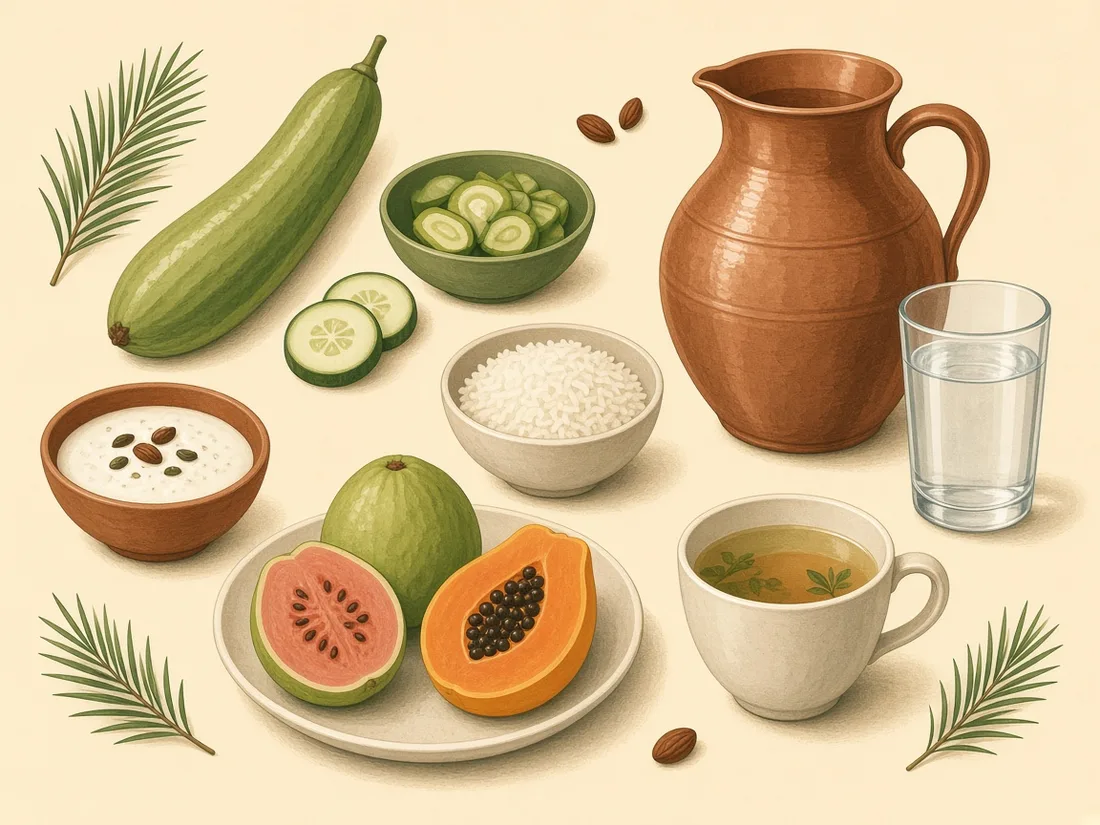
- Breakfast: poha, upma, idli, vegetable daliya or oats with fruit
- Lunch: roti or rice, a moderate portion of dal, lauki, tori, tinda or other seasonal sabzi, salad and curd
- Snacks: fruit (guava, orange, papaya, apple), roasted chana in small portions, buttermilk
- Dinner: light and early — khichdi, vegetable soup, roti with sabzi
- Drinks: water, herbal teas, buttermilk; fewer sweetened drinks and less alcohol
Low-fat dairy and vitamin-C-rich fruits are often suggested as helpful choices; the NHS also suggests asking your GP about vitamin C supplements.
Herbs and formulations — use under guidance
Ayurvedic doctors may suggest formulations such as:
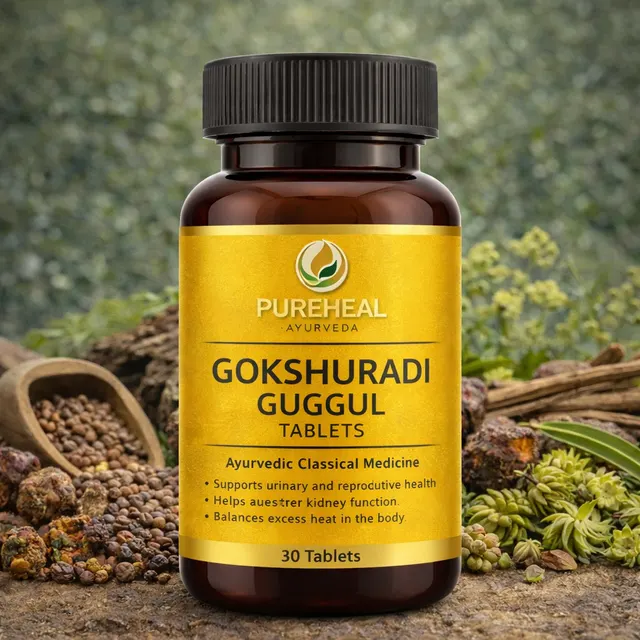
- Gokshuradi Guggulu — a classical formula of gokshura (Tribulus terrestris) and guggulu, traditionally used for vatarakta and urinary health. PureHeal stocks Gokshuradi Guggulu.
- Kaishore Guggulu, Guduchi (giloy) and others, depending on the person.
- Turmeric/curcumin, traditionally used for joint comfort — though the NCCIH notes that strong evidence is lacking for most uses.
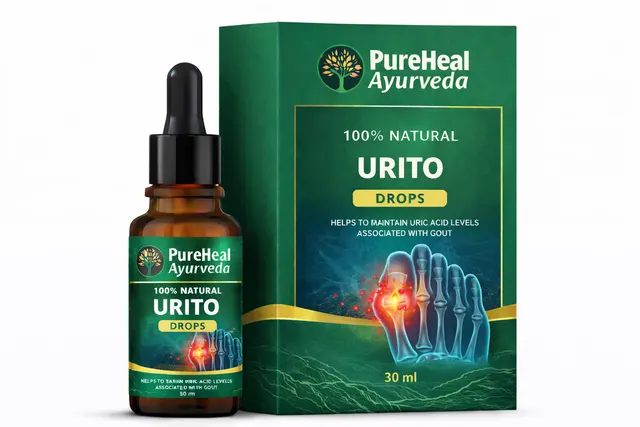
PureHeal's Urito Care Drops are a herbal formulation designed to support healthy uric acid balance and joint comfort.
Please keep in mind:
- Herbs don't replace prescribed uric-acid-lowering medicines. The NHS stresses that these should be taken regularly, even when you feel fine. Never stop them without your doctor's advice.
- Guggulu-based formulas may not suit people who are pregnant, have stomach ulcers, or take blood thinners or thyroid medicines.
- If you have kidney disease or kidney stones, consult your doctor before taking any herbal product.
When to see a doctor
See a doctor if you have joint pain and swelling for the first time, or if your usual treatment isn't helping. Seek urgent help if a hot, swollen joint comes with high fever, feeling shivery or unwell — this can be a joint infection that needs immediate treatment. Untreated gout can lead to joint damage, tophi (hard lumps under the skin) and kidney stones.
Frequently asked questions
How can I reduce uric acid naturally?
Drink enough water, limit red and organ meats, some seafood, alcohol and sugary drinks, avoid very large meals and crash diets, lose excess weight gradually and stay active. If your doctor prescribes uric-acid-lowering medicine, take it regularly.
Is dal bad for uric acid?
Dal and most plant foods are generally considered fine in moderate portions as part of a balanced diet. Animal sources of purines, alcohol and sugary drinks have a bigger effect. Ask your doctor or dietitian for advice specific to you.
Why does uric acid and joint pain get worse in winter?
In winter many people drink less water, eat heavier festive meals, move less and may drink more alcohol at celebrations — all of which can raise uric acid or trigger attacks. Ayurveda also describes cold weather as aggravating Vata, which is linked to joint stiffness.
Can Gokshuradi Guggulu replace gout medicine?
No. Gokshuradi Guggulu is a classical formula traditionally used for vatarakta, but it should not replace medicines prescribed by your doctor. If you want to add it, do so only under a qualified Ayurvedic doctor and tell your physician.
Sources
- NHS — Gout
- NCCIH — Turmeric
- NCCIH — Ayurvedic Medicine: In Depth
Keep reading
Related articles
Herbs & formulations
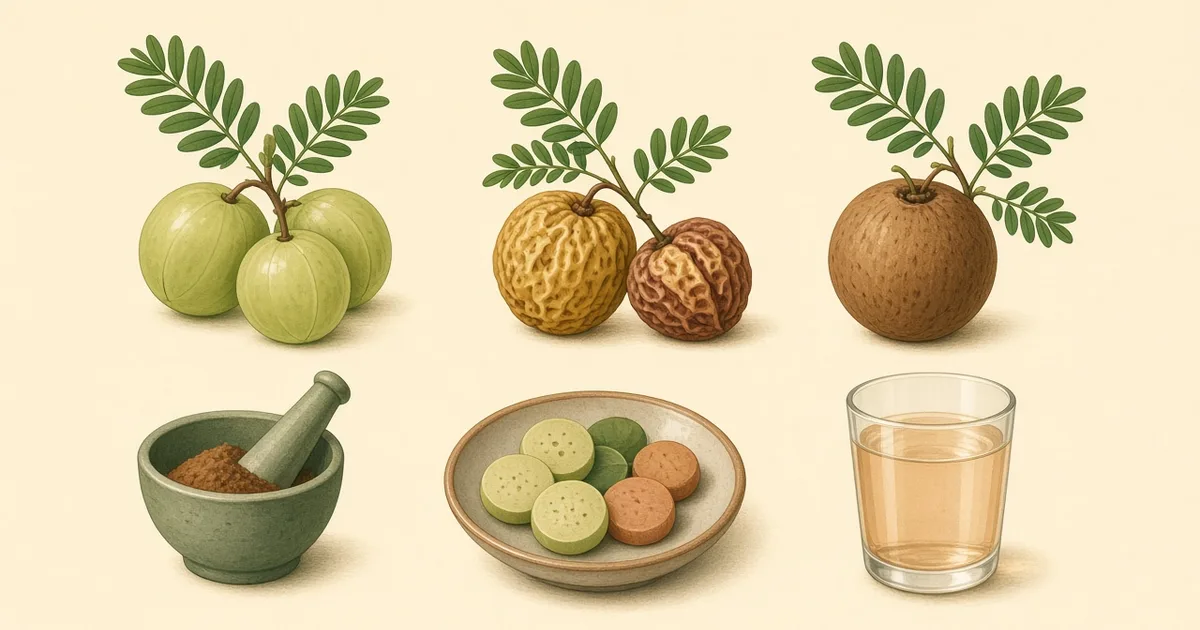
Triphala Benefits: How to Take Triphala Tablets for Digestion and Gentle Detox
Amla, Haritaki and Bibhitaki — three humble fruits that make one of Ayurveda's most-used formulas. Here is how triphala works and how to take it well.
Seasonal wellness
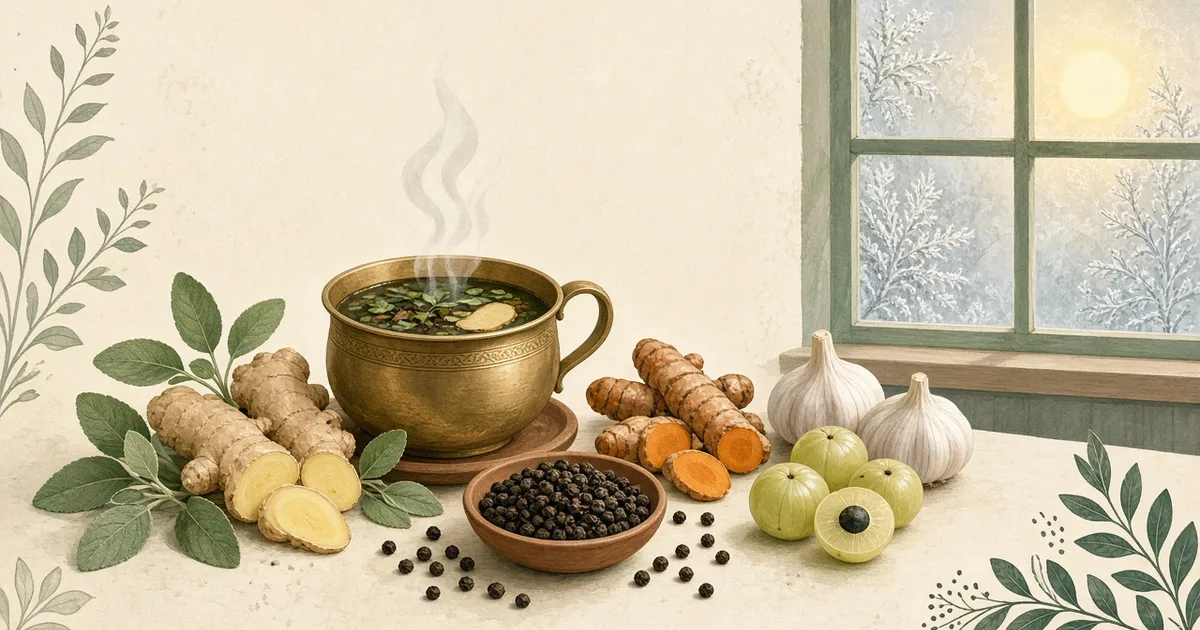
How to Boost Immunity in Winter the Ayurvedic Way: 10 Daily Habits
Winter is the season Ayurveda calls the time of strength. Here is how to use it well — with food, routine, movement and a few trusted kitchen herbs.
Digestion
Shankha Vati Benefits, Uses & How to Take It for Gas, Acidity and Indigestion
Wedding season, heavy meals, late dinners — and then the bloating. Here is what Shankha Vati is, how Ayurveda uses it, and how to take it safely.