
Herbs & formulations
Triphala Benefits: How to Take Triphala Tablets for Digestion and Gentle Detox
Amla, Haritaki and Bibhitaki — three humble fruits that make one of Ayurveda's most-used formulas. Here is how triphala works and how to take it well.
By the PureHeal Ayurveda editorial team
In this article
- What is Triphala?
- What does research say?
- Triphala benefits — what people use it for
- How to take Triphala
- Side effects and who should avoid triphala
- Churna, tablet or liquid — which form to choose?
- Triphala works best with these habits
- Triphala vs other digestive formulas
- When to see a doctor
- Frequently asked questions
If there is one Ayurvedic formula found in almost every Indian household, it is Triphala. Grandparents swear by "raat ko triphala, subah pet saaf". But beyond the family wisdom, what exactly is triphala, what are its real benefits, and how should you take it?
What is Triphala?
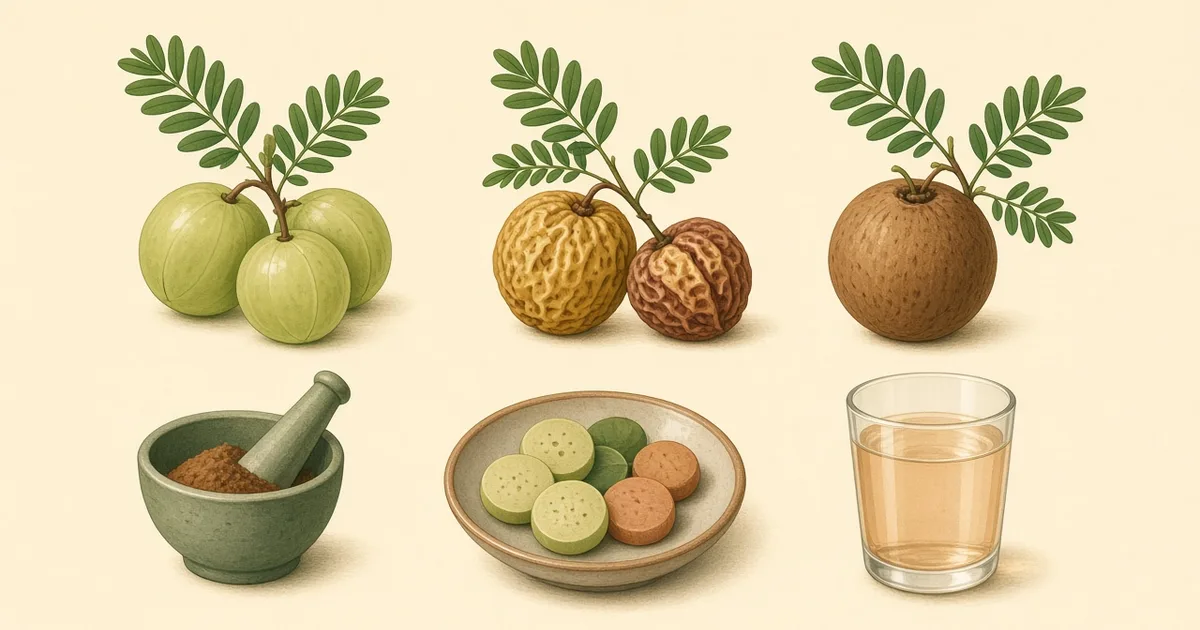
Tri means three and phala means fruits. Triphala is a classical blend of three dried fruits, usually in equal parts:
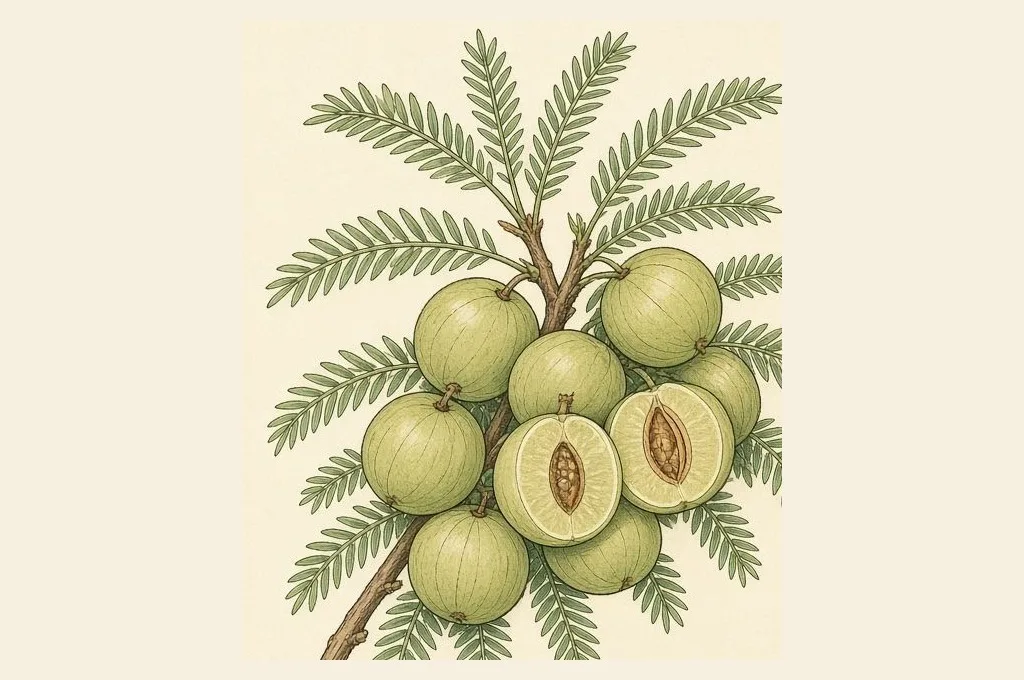
- Amalaki (Amla) — Phyllanthus emblica / Emblica officinalis, the Indian gooseberry. Sour, cooling, rich in vitamin C. Traditionally associated with Pitta balance.
- Bibhitaki (Baheda) — Terminalia bellirica. Astringent; traditionally associated with Kapha balance.
- Haritaki (Harad) — Terminalia chebula. Called the "king of medicines" in Tibetan tradition; traditionally associated with Vata balance and regular elimination.
Because each fruit is linked to one dosha, triphala is described in Ayurveda as tridoshic — suitable, in the right dose, for most body types. It is also classified as a rasayana (rejuvenative) and is used both as a gentle daily support and in larger doses as a mild laxative.
What does research say?
A widely cited review in the Journal of Alternative and Complementary Medicine summarised triphala's traditional uses and the research behind them (Peterson et al., 2017). Beyond its well-known laxative action, laboratory and early clinical studies have explored triphala for appetite, hyperacidity, antioxidant and anti-inflammatory effects, dental health and more.
The honest picture: triphala's role in supporting bowel regularity is the best established, both traditionally and clinically. Many of the other benefits are promising but based on small studies or laboratory research, so they should be seen as "being explored" rather than proven.
Triphala benefits — what people use it for
1. Constipation and bowel regularity
This is triphala's most common use. It is traditionally described as an anulomana — it supports the natural downward movement in the gut — and is considered gentler than harsh stimulant laxatives. Many people find it helpful for occasional constipation, especially when travel, wedding food or winter routines throw digestion off.
2. Everyday digestive support
In smaller doses, triphala is used as a daily digestive tonic. Ayurveda believes it helps clear ama (undigested residue) and supports agni, the digestive fire, without overheating the system.
3. Gut-friendly fibre and polyphenols
Triphala fruits are rich in tannins and other polyphenols. Research interest in how these compounds interact with gut bacteria is growing, though human evidence is still early.
4. Eye wash and oral care (traditional uses)
Traditionally, a cooled, filtered triphala decoction was used as a mouth rinse, and in some traditions, as an eye wash. Please don't put anything into your eyes without an eye doctor's advice — home eye-washes can cause infection or injury.
How to take Triphala
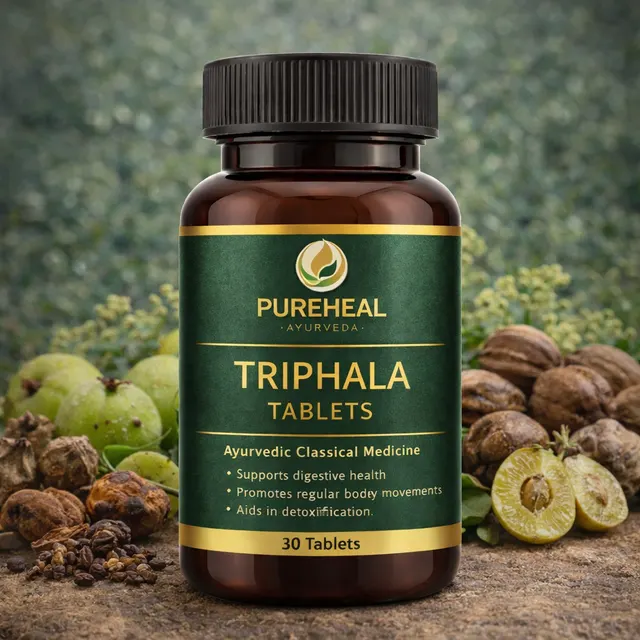
Triphala comes as churna (powder), tablets and liquid preparations. Tablets are popular because they avoid the very bitter-astringent taste of the powder and give a consistent dose. PureHeal stocks Triphala Tablets.
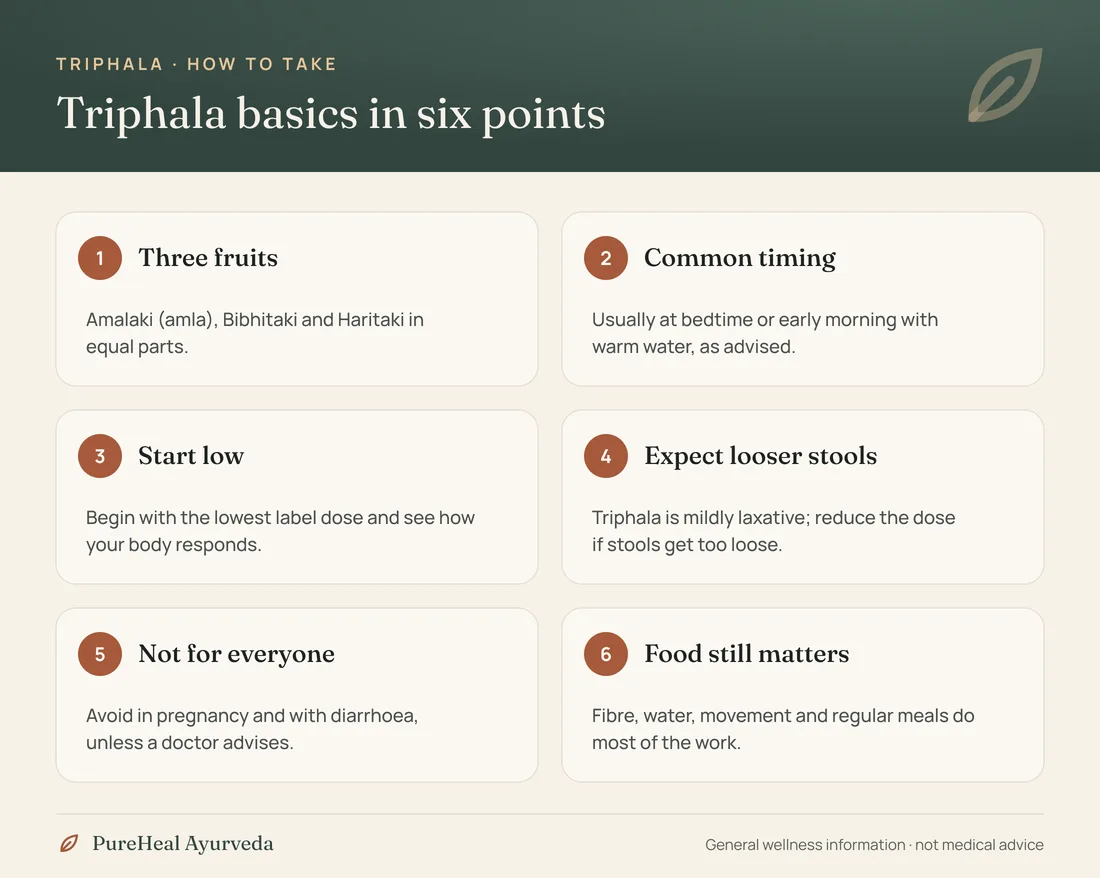
General traditional guidance (always follow the label or your doctor):
- For regularity: commonly taken at bedtime with a glass of warm water.
- As a daily tonic: a smaller dose in the morning on an empty stomach or between meals, as advised.
- Start low: begin with the lowest dose on the label and see how your body responds over a few days.
- Give it time: effects on regularity are usually noticed within a few days; don't keep increasing the dose.
- Take breaks: Ayurvedic doctors often suggest courses of a few weeks rather than continuous use for years.
Side effects and who should avoid triphala
Triphala is generally well tolerated in normal doses, but:
- It can cause loose stools, cramps or gas, especially at higher doses. Reduce the dose if this happens.
- Avoid during pregnancy and breastfeeding unless a doctor advises it.
- Avoid if you have diarrhoea, dysentery or inflammatory bowel disease, or are recovering from such illness.
- Children and older adults should use it only under guidance.
- If you take medicines for diabetes, blood thinners or other regular medicines, ask your doctor, as herbs can affect how medicines work.
- Long-term dependence on any laxative isn't healthy — if you need help every day, find the underlying cause.
Churna, tablet or liquid — which form to choose?
| Form | Pros | Keep in mind |
|---|---|---|
| Churna (powder) | Traditional; dose can be adjusted easily | Very bitter-astringent taste; harder to measure on the go |
| Tablets | Consistent dose, no taste, easy to carry | Swallow with enough warm water |
| Liquid / decoction | Easy for people who can't swallow tablets | Shorter shelf life once prepared |
Whichever you choose, buy from a licensed manufacturer, check the expiry date, and store it in a cool, dry place away from moisture — powders in particular can clump and lose quality in humid weather. If you are switching from powder to tablets (or vice versa), don't assume the dose is the same; follow the label.
Triphala works best with these habits
Triphala isn't a substitute for a gut-friendly lifestyle. The NHS advice on constipation focuses on the basics, and Ayurveda agrees:
- Fibre: whole grains, dal, vegetables, fruits like papaya, guava and soaked figs.
- Fluids: plenty of water — warm water is especially comforting in winter.
- Movement: a daily walk does wonders for a sluggish gut.
- Routine: eat at regular times and don't ignore the urge to go.
- A little healthy fat: a teaspoon of ghee with meals is a traditional Ayurvedic remedy for dry, Vata-type constipation.
Triphala vs other digestive formulas
| Formulation | Best known for |
|---|---|
| Triphala | Gentle bowel regularity, daily digestive tonic |
| Shankha Vati | Gas, bloating, indigestion after heavy meals |
| Chitrakadi Vati | Sluggish digestion, low appetite |
Read our Shankha Vati guide for gas and bloating.
When to see a doctor
Constipation is usually harmless, but see a doctor if you notice blood in your stool, unexplained weight loss, severe abdominal pain, a sudden change in bowel habits lasting more than three weeks, or constipation along with vomiting and inability to pass gas.
Frequently asked questions
What is the best time to take triphala?
For bowel regularity, it is commonly taken at bedtime with warm water. As a general digestive tonic, smaller doses are sometimes taken in the morning on an empty stomach. Follow the label or your Ayurvedic doctor's advice.
Can I take triphala every day?
Many people take triphala daily for a few weeks. Ayurvedic doctors often recommend courses with breaks rather than continuous use for years. If you need a laxative every day, see a doctor to find the cause.
Does triphala help with weight loss?
Triphala is sometimes marketed for weight loss, but strong human evidence is lacking. Any short-term change is mostly from improved regularity. Diet, activity and sleep matter far more.
What are the side effects of triphala?
The most common side effects are loose stools, cramps and gas, usually at higher doses. Avoid it in pregnancy, diarrhoea or inflammatory bowel disease, and check with a doctor if you take regular medicines.
Sources
- Peterson CT et al. (2017). Therapeutic Uses of Triphala in Ayurvedic Medicine. J Altern Complement Med. (Full text)
- NHS — Constipation
- NCCIH — Ayurvedic Medicine: In Depth
Shop related products
From the PureHeal range


Keep reading
Related articles

Digestion
Shankha Vati Benefits, Uses & How to Take It for Gas, Acidity and Indigestion
Wedding season, heavy meals, late dinners — and then the bloating. Here is what Shankha Vati is, how Ayurveda uses it, and how to take it safely.

Seasonal wellness
How to Boost Immunity in Winter the Ayurvedic Way: 10 Daily Habits
Winter is the season Ayurveda calls the time of strength. Here is how to use it well — with food, routine, movement and a few trusted kitchen herbs.

Joint & metabolic health
High Uric Acid and Joint Pain in Winter: Ayurvedic Diet and Lifestyle Tips
Winter, wedding feasts and less water can be a tough mix for uric acid. Here is a practical, India-friendly guide to diet and lifestyle — and where…